

What Health Conditions Can Make Weight Loss More Difficult?
Health conditions that make weight loss difficult can affect metabolism, hormones, appetite, energy levels, and how the body uses glucose. Conditions such as hypothyroidism, insulin resistance, PCOS, and certain chronic illnesses may slow progress even when diet and exercise are consistent. Medications, sleep problems, stress, and other metabolic factors can also influence weight management. Board-Certified Dr. Shima Hadidchi, MD, and our team can evaluate possible medical barriers and create a personalized plan based on individual health needs. Contact us today for more information or schedule an appointment online! We are conveniently located at 12740 Hesperia Rd, Suite A, Victorville, CA 92395.
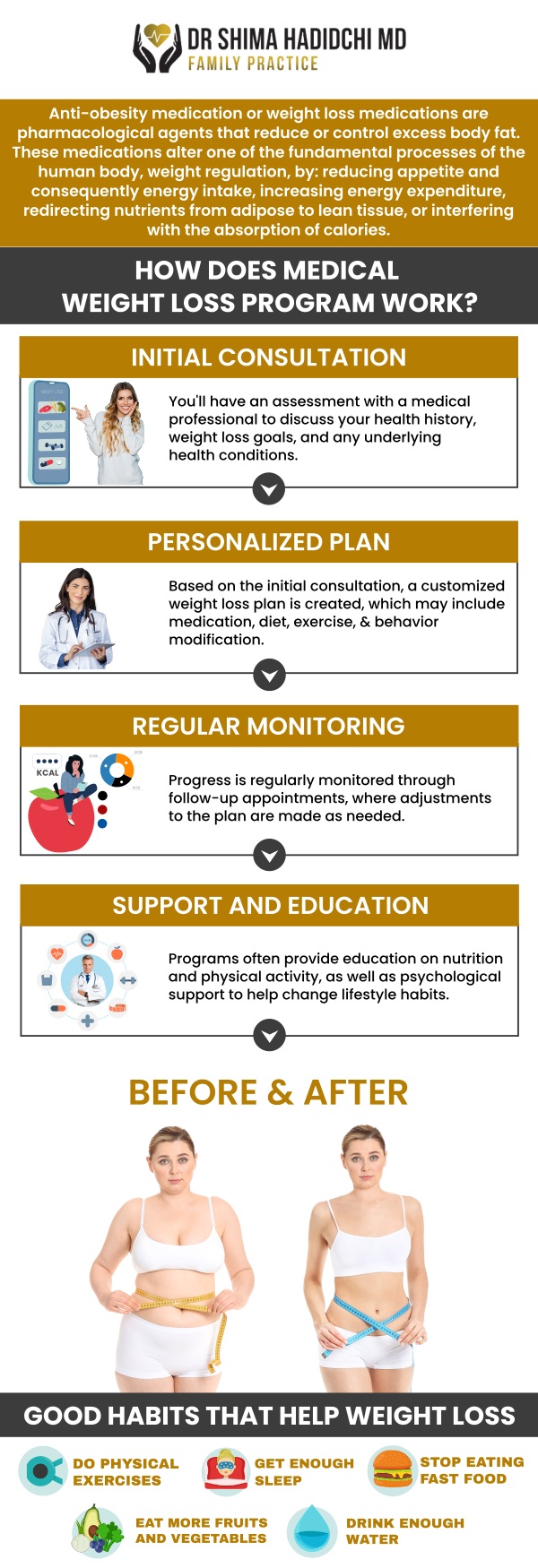
Table of Contents:
What medical conditions can make it difficult to lose weight?
Can thyroid problems make it harder to lose weight?
Can insulin resistance cause difficulty losing weight?
When should you see a doctor if you cannot lose weight despite diet and exercise?
Discover What May Be Making Weight Loss Difficult With Board-Certified Dr. Shima Hadidchi, MD, and the Team
Losing weight is influenced by much more than willpower, calorie intake, or exercise alone. Hormones, metabolism, blood glucose regulation, sleep, medications, mental health, and underlying medical conditions can all influence how easily the body loses or gains weight. Understanding health conditions that make weight loss difficult can be especially important when consistent lifestyle changes are not producing the expected results.
Conditions such as hypothyroidism, polycystic ovary syndrome (PCOS), insulin resistance, Cushing’s syndrome, and certain chronic illnesses may contribute to weight gain or make weight management more challenging. Medications, chronic stress, inadequate sleep, and physical limitations can also affect energy expenditure, hunger, and activity levels. Our information about weight loss resistance explains why some individuals experience slower progress despite making meaningful changes.
A comprehensive weight loss consultation can help determine whether medical, metabolic, behavioral, or lifestyle factors may be influencing progress. Instead of assuming that everyone should respond to the same diet or exercise program, our team evaluates individual health history and weight-related concerns to develop a more personalized approach.
Several medical conditions can affect body weight or make weight loss more complicated. Hypothyroidism can slow normal body processes and may contribute to fatigue and weight gain. PCOS can involve hormonal and metabolic changes, including insulin resistance, which may make weight management more challenging for some women. Cushing’s syndrome, although uncommon, can cause excess cortisol activity and characteristic weight gain.
Insulin resistance and prediabetes are also closely connected with metabolic health. When the body becomes less responsive to insulin, blood glucose regulation becomes more difficult, and weight gain may occur. Other health concerns—including depression, chronic stress, sleep apnea, and conditions that limit mobility—may indirectly make weight loss harder by affecting appetite, energy, sleep, physical activity, or daily routines. The relationship between weight and chronic illness can therefore work in both directions.
Our internal medicine services can help evaluate weight concerns alongside chronic medical conditions. When blood sugar may be involved, our diabetes management services can provide additional assessment and ongoing metabolic monitoring.
Weight alone does not reveal why someone is struggling to lose weight. Our team may consider medical history, current medications, family history, blood pressure, sleep patterns, nutrition, activity, and previous weight management attempts. In-house lab testing may also be recommended when appropriate to investigate blood glucose, thyroid function, cholesterol, or other health markers.
Yes. An underactive thyroid, known as hypothyroidism, can contribute to weight gain and make weight management more difficult for some individuals. The thyroid produces hormones that help regulate metabolism and many other functions throughout the body. When thyroid hormone levels are too low, normal body processes can slow down.
Weight gain is only one possible symptom. Hypothyroidism can also cause fatigue, sensitivity to cold, constipation, dry skin, thinning hair, slowed heart rate, muscle weakness, or changes in menstrual cycles. These symptoms are not specific to thyroid disease, so experiencing fatigue or difficulty losing weight does not automatically mean someone has hypothyroidism.
A medical assessment is particularly helpful when weight changes occur alongside other symptoms. Our annual physical exams provide an opportunity to discuss changes in weight, energy, and general health, while our family practice and primary care services allow multiple potential causes to be considered together.
Women experiencing weight concerns along with menstrual irregularities or other hormonal symptoms may also benefit from our women’s health services. Conditions such as PCOS can affect metabolic health and may involve both insulin resistance and difficulty managing weight. Identifying the underlying issue is important because simply restricting calories more aggressively may not address the medical factor influencing progress.
Insulin resistance occurs when cells in the muscles, fat, and liver do not respond to insulin as effectively as they should. The pancreas may initially compensate by producing more insulin to help manage blood glucose. Over time, this metabolic imbalance can contribute to higher blood sugar levels and may progress to prediabetes or type 2 diabetes.
Insulin resistance is strongly associated with overweight and obesity, and the relationship can become cyclical. Excess body fat can contribute to insulin resistance, while insulin resistance and related metabolic changes can make maintaining a healthy weight more complicated. However, insulin resistance should not be diagnosed based only on body weight or difficulty losing weight because many people have no obvious symptoms.
Our diabetes management guide explains how nutrition, physical activity, weight, and blood glucose interact. Patients interested in monitoring weight-related health risk can also use our BMI calculator as a general screening tool, although BMI does not directly measure insulin resistance or body composition.
Improving nutrition, increasing appropriate physical activity, obtaining adequate sleep, and reducing excess body weight can improve insulin sensitivity for many people. When additional medical support is appropriate, our medical weight loss services can provide a structured plan based on individual metabolic and health needs rather than relying on a one-size-fits-all diet.
For eligible patients, our team may also discuss physician-supervised treatment options. Information about Semaglutide GLP-1 eligibility and the role of BMI in GLP-1 weight management can help patients understand how medical history and weight-related conditions may factor into treatment decisions.
Consider a medical evaluation when you have followed consistent nutrition and physical activity habits but experience little progress, unexplained weight gain, or repeated difficulty maintaining weight loss. Evaluation may be especially useful when weight concerns occur with fatigue, menstrual changes, increased thirst, frequent urination, excessive hunger, sleep problems, muscle weakness, or other new symptoms.
A physician can also review medications because some prescriptions may contribute to increased appetite, fluid retention, reduced activity, or weight gain. Medication should never be stopped or changed simply because weight changes occur. Instead, the potential benefits, risks, and alternatives should be reviewed medically.
Our primary care services allow weight concerns to be considered alongside overall health rather than treated as an isolated number on the scale. Patients who are unable to attend an initial appointment in person may be able to discuss certain concerns through our telemedicine services.
Medical weight management can also provide more meaningful ways to measure progress. Body weight is useful, but changes in waist circumference, metabolic markers, eating patterns, physical endurance, blood pressure, and other health indicators may provide additional information. Our guide on how BMI personalizes weight loss planning discusses why BMI is useful as a screening measure while still being only one part of an individualized assessment.
Seeking medical guidance does not mean that lifestyle changes have failed. It can help determine whether an underlying factor is limiting progress and whether the weight management plan needs to be adjusted.
Board-Certified Dr. Shima Hadidchi, MD, and our team take an individualized approach to patients who are frustrated by slow or unsuccessful weight loss. Evaluation can include reviewing medical history, current medications, weight trends, eating habits, physical activity, sleep, stress, family history, and symptoms that may point toward metabolic or hormonal concerns.
Our goal is to determine whether lifestyle patterns, medical conditions, medications, or a combination of factors may be contributing to weight loss resistance. Patients can learn more about integrating primary care with weight management and how medical supervision can support health concerns that extend beyond the number on the scale.
When appropriate, Board-Certified Dr. Shima Hadidchi, MD, can create a personalized plan incorporating nutrition, activity, behavioral changes, monitoring, and medical treatment options. Our information about working with a weight loss doctor explains how physician guidance can help address individual obstacles rather than relying on restrictive or unsustainable approaches.
Patients considering more structured support can also review information about doctor-supervised weight loss, medical weight loss costs, and our available patient resources. Those establishing ongoing medical care can review our information for new patients.
Our team focuses on identifying factors that may be affecting progress and building a sustainable strategy around each patient’s health needs. If diet and exercise alone have not produced the expected results, understanding the medical reasons behind weight loss resistance may be an important next step toward healthier, more achievable long-term weight management. Contact us today for more information or schedule an appointment online! We are conveniently located at 12740 Hesperia Rd, Suite A, Victorville, CA 92395. We serve patients from Victorville CA, Apple Valley CA, Spring Valley Lake CA, Hesperia CA, Baldy Mesa CA, Adelanto CA, and surrounding areas.

Check Out Our 5 Star Reviews


Additional Services You May Need
▸ Telemedicine
▸ Family Practice And Primary Care
▸ Walk-Ins
▸ Weight Loss Management
▸ Zepbound for Weight Loss
▸ Women’s Health
▸ Vaccinations & Immunizations
▸ Diabetes Management
▸ Geriatrics
▸ Pediatrics
▸ Internal Medicine
▸ Acne Treatment
▸ Cryotherapy Treatment
▸ Skin Lesion Removal
▸ Dementia Treatment
▸ Semaglutide GLP-1 Injections
▸ Flu Shot
Additional Services You May Need
- Telemedicine
- Family Practice And Primary Care
- Walk-Ins
- Weight Loss Management
- Zepbound for Weight Loss
- Women’s Health
- Vaccinations & Immunizations
- Diabetes Management
- Geriatrics
- Pediatrics
- Internal Medicine
- Acne Treatment
- Cryotherapy Treatment
- Skin Lesion Removal
- Dementia Treatment
- Semaglutide GLP-1 Injections
- Flu Shot





 Send Text
 How May I Help You?