

How Can a BMI Calculation Help Personalize Your Weight Loss Plan?
A BMI calculation acts as an essential diagnostic tool, providing an objective baseline of your current weight status to assess potential health risks. By understanding your specific BMI category, Dr. Shima Hadidchi, a board-certified physician, can move beyond generic advice to set realistic, safe targets tailored to your unique body composition. This data-driven foundation ensures your weight loss plan consists of the precise medical and nutritional strategies you need to succeed. For more information, contact us today or schedule an appointment online. We have convenient locations to serve you in Apple Valley, CA and Victorville, CA.
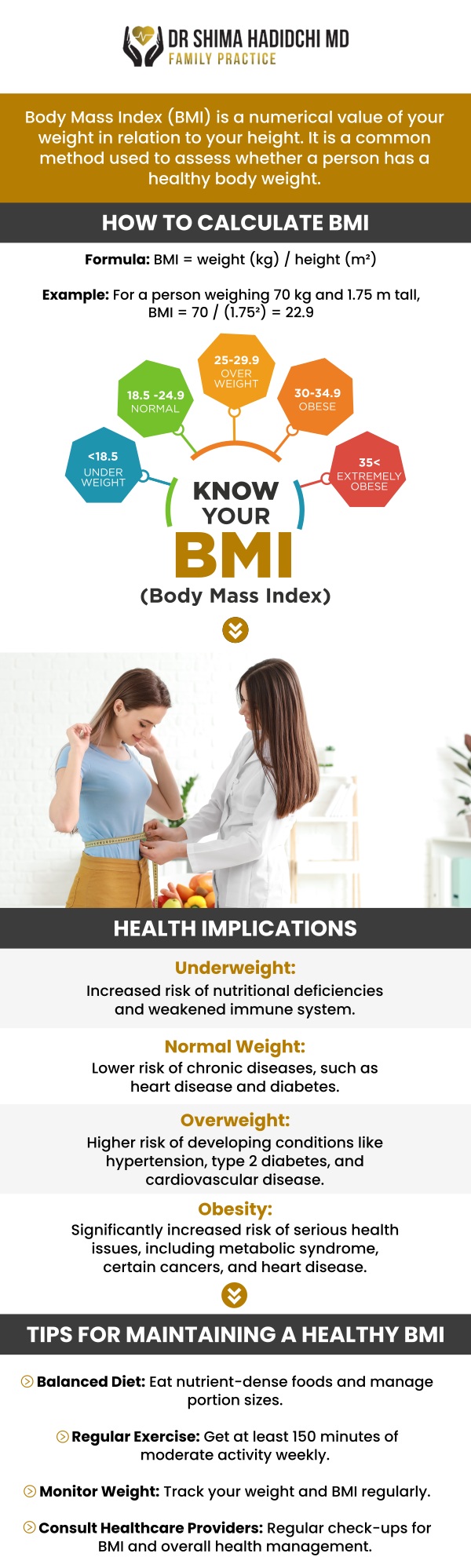
Table of Contents:
What is BMI, and why is it important for weight loss treatment?
What is a healthy BMI range for weight loss?
How accurate is the BMI calculation for determining weight loss needs?
How often should I check my BMI during my weight loss journey?
How to Monitor Progress Beyond BMI
How Healthy is Your BMI? Let Dr. Shima Hadidchi, MD, Guide You to Wellness
Body Mass Index (BMI) is a simple, widely used calculation that helps evaluate whether an individual’s weight falls within a healthy range based on their height. It’s calculated by dividing a person’s weight (in kilograms) by the square of their height (in meters). The result is a number that categorizes a person’s weight as underweight, normal weight, overweight, or obese. This is important for weight loss treatment because it provides a clear and easily interpretable measure of whether a person’s weight is increasing the risk of health complications.
The BMI is classified into the following categories:
• Underweight: BMI less than 18.5
• Normal weight: BMI between 18.5 and 24.9
• Overweight: BMI between 25 and 29.9
• Obesity: BMI 30 and above
For adults, a BMI between 18.5 and 24.9 is considered healthy and is associated with a reduced risk of chronic diseases such as heart disease, stroke, type 2 diabetes, and certain types of cancer. Individuals with a BMI of 25 or above are at an increased risk of developing these conditions, and their weight management becomes crucial for preventing further health complications.
Dr. Shima Hadidchi and our team use BMI as an initial screening tool for assessing weight-related health risks and guiding weight loss treatments. While it’s not a perfect measure of body fat—especially in individuals with high muscle mass—it provides a clear indication of whether weight loss may be necessary to improve overall health.
A healthy BMI falls within the range of 18.5 to 24.9. Individuals in this range are generally considered to have a lower risk for many chronic diseases, such as cardiovascular disease, type 2 diabetes, and hypertension. However, for individuals whose BMI falls into the overweight or obese categories (25 and above), weight loss becomes a priority for improving overall health and reducing the risks of these diseases.
For Overweight Individuals (BMI 25–29.9)
If your BMI is between 25 and 29.9, you are classified as overweight. Losing even a small percentage of body weight can result in significant health benefits, including lowering blood pressure, reducing cholesterol levels, and decreasing the risk of type 2 diabetes. For example, losing 5–10% of your body weight can improve these key health metrics. Overweight individuals may benefit from gradually lowering their BMI through a combination of a balanced diet and regular physical activity.
For Obese Individuals (BMI 30 and Above)
A BMI of 30 or above indicates obesity, a condition that is associated with more severe health risks, including heart disease, sleep apnea, and certain cancers. Achieving a healthy BMI is crucial for individuals in this category to improve their quality of life and reduce the risks of long-term complications. For people who are obese, weight loss is essential and often requires a more structured approach, including medical supervision, lifestyle changes, and potentially weight loss treatments or interventions.
For both overweight and obese individuals, the goal is to reduce BMI to within the normal weight range, which can significantly reduce the risks associated with excess body fat. Effective weight loss treatment plans focus on long-term lifestyle changes, including sustainable dietary modifications, increased physical activity, and emotional support.
Dr. Shima Hadidchi and our team offer personalized weight loss plans tailored to meet your specific health needs, focusing on achieving a BMI within a healthy range for long-term wellness.
While BMI is a useful tool for categorizing body weight and identifying potential health risks, it has some limitations when it comes to determining an individual’s specific weight loss needs. The most significant limitation is that BMI does not distinguish between muscle mass and fat mass. For example, a highly muscular person may have a high BMI, even though their body fat percentage is low, which would mislead the assessment of their health risks.
Additionally, BMI doesn’t account for important factors such as age, sex, ethnicity, and body fat distribution, which all play a significant role in determining a person’s overall health. For instance, two people with the same BMI could have very different levels of body fat, with one person having a higher proportion of muscle and the other having a higher proportion of fat.
Because of these limitations, BMI should be considered as one part of a broader health assessment that includes other measurements, such as waist circumference, body fat percentage, and overall health. Dr. Shima Hadidchi and our team consider these factors when developing a personalized weight loss strategy that is safe and effective for each patient.
At our practice, we use BMI alongside other assessments to ensure that each patient receives the most accurate and tailored weight loss plan possible.
Tracking BMI regularly is an essential part of the weight loss journey. However, it’s important to keep in mind that BMI doesn’t change dramatically from week to week. Therefore, checking your BMI too frequently may lead to unnecessary stress and disappointment, as the number might fluctuate due to daily variations in weight, water retention, or other temporary factors.
We recommend checking your BMI approximately once a month during your weight loss journey. This allows enough time for your body to respond to the lifestyle changes you’re making, and provides a more accurate picture of your progress. It also provides an opportunity to evaluate the effectiveness of your weight loss plan and make adjustments if necessary.
In addition to BMI, it’s crucial to track other measurements and factors, such as body fat percentage, muscle mass, and overall well-being. These additional assessments help provide a clearer understanding of your progress, as they account for factors like muscle gain and fat loss, which BMI alone cannot reflect.
At Dr. Shima Hadidchi MD Family Practice, we guide you through the process of regularly assessing your weight loss progress, ensuring that you stay on track and motivated. We focus on creating a personalized weight loss plan that suits your individual needs and goals, while also taking into account the non-BMI aspects of your health.
While BMI is an important tool for measuring weight loss, it’s not the only one. There are many other ways to monitor your progress on your weight loss journey:
• Body Fat Percentage: This measures the proportion of your body weight that is fat. It provides a more accurate picture of body composition than BMI alone and can be helpful in understanding how much fat you’re losing versus muscle mass.
• Waist Circumference: Measuring your waist can give a good indication of whether you’re losing visceral fat (fat stored around the organs), which is closely linked to health risks such as heart disease and type 2 diabetes.
• Physical Health and Fitness: Tracking improvements in physical activity, strength, and stamina can be a positive indicator of progress, even if your weight or BMI isn’t changing as quickly as you’d like.
• Mental and Emotional Well-being: Weight loss can be a significant emotional journey. Monitoring your emotional health and how you feel about your progress can help you stay motivated and committed to your weight loss plan.
By looking at the whole picture and considering all of these factors, you can achieve sustainable weight loss that improves your overall health and wellness. Dr. Shima Hadidchi and our team are here to help you stay focused on your health goals, providing guidance every step of the way.
BMI is an essential tool in assessing weight-related health risks and is a valuable part of any weight loss treatment plan. It helps categorize weight and provides a baseline for determining whether weight loss is necessary. However, BMI should be used in conjunction with other assessments to get a complete picture of an individual’s health. By tracking your BMI, body composition, and overall well-being, you can take an informed approach to weight loss that focuses on long-term health, rather than quick fixes.
If you’re ready to take the next step toward achieving your healthiest self, schedule an appointment with Dr. Shima Hadidchi. Our team is here to support you every step of the way with a customized weight loss plan designed specifically for your needs and goals. Together, we can create a plan that works for you and helps you achieve lasting success.
Your Body Mass Index (BMI) provides a snapshot of your overall health by comparing your weight to your height. While it doesn’t measure body fat directly, it can give you important insights into whether you are at a higher risk for chronic conditions such as diabetes, hypertension, and cardiovascular disease. Understanding your BMI is a crucial first step in determining whether lifestyle changes, such as improved nutrition or increased physical activity, are needed to enhance your health. However, it’s important to remember that BMI is just one piece of the puzzle and doesn’t account for factors like muscle mass or fat distribution.
With Dr. Shima Hadidchi, MD, guiding your journey to better health, you’ll receive personalized advice on how to improve or maintain a healthy BMI. Dr. Hadidchi takes a comprehensive approach, taking into account your individual health profile, goals, and challenges. She combines medical expertise with a compassionate, patient-centered approach to create a tailored weight management plan that helps you achieve your desired wellness outcomes. Whether you’re seeking to improve your BMI for better health or maintain a healthy weight, Dr. Hadidchi provides the support and guidance you need to make sustainable, positive changes in your life. For more information, contact us today or schedule an appointment online. We have convenient locations to serve you in Apple Valley, CA and Victorville, CA. We serve patients from Apple Valley CA, Victorville CA, Spring Valley Lake CA, Hesperia CA, Baldy Mesa CA, Mountain View Acres CA, Adelanto CA, and surrounding areas.

Log your stats securely for a professional, physician-led wellness evaluation.
Share your details to receive an expert health assessment from your physician.
Log your stats securely for a professional, physician-led wellness evaluation.
Share your details to receive an expert health assessment from your physician.

Check Out Our 5 Star Reviews


Additional Services You May Need
▸ Telemedicine
▸ Family Practice And Primary Care
▸ Walk-Ins
▸ Weight Loss Management
▸ Zepbound for Weight Loss
▸ Women’s Health
▸ Vaccinations & Immunizations
▸ Diabetes Management
▸ Geriatrics
▸ Pediatrics
▸ Internal Medicine
▸ Acne Treatment
▸ Cryotherapy Treatment
▸ Skin Lesion Removal
▸ Dementia Treatment
▸ Semaglutide GLP-1 Injections
▸ Flu Shot
Additional Services You May Need
- Telemedicine
- Family Practice And Primary Care
- Walk-Ins
- Weight Loss Management
- Zepbound for Weight Loss
- Women’s Health
- Vaccinations & Immunizations
- Diabetes Management
- Geriatrics
- Pediatrics
- Internal Medicine
- Acne Treatment
- Cryotherapy Treatment
- Skin Lesion Removal
- Dementia Treatment
- Semaglutide GLP-1 Injections
- Flu Shot





 Send Text
 How May I Help You?