

FAQs About COVID Vaccine
COVID-19 vaccination recommendations can vary based on age, medical history, immune status, previous vaccinations, and individual risk factors. Dr. Shima Hadidchi, MD, and our team help patients understand current vaccination guidelines, potential benefits, common side effects, and important safety precautions. Certain medical conditions, including a history of severe allergic reactions or myocarditis following vaccination, may require additional evaluation before receiving another dose. Patients can discuss their health concerns, previous vaccine reactions, and appropriate vaccination schedules with a qualified healthcare professional. For more information, contact us today or book an appointment online. We are conveniently located at 18112 Wika Rd, Suite 102, Apple Valley, CA 92307.
*We Offer Pediatric Covid-19 Vaccinations for Anyone Aged 6 Months and Up.
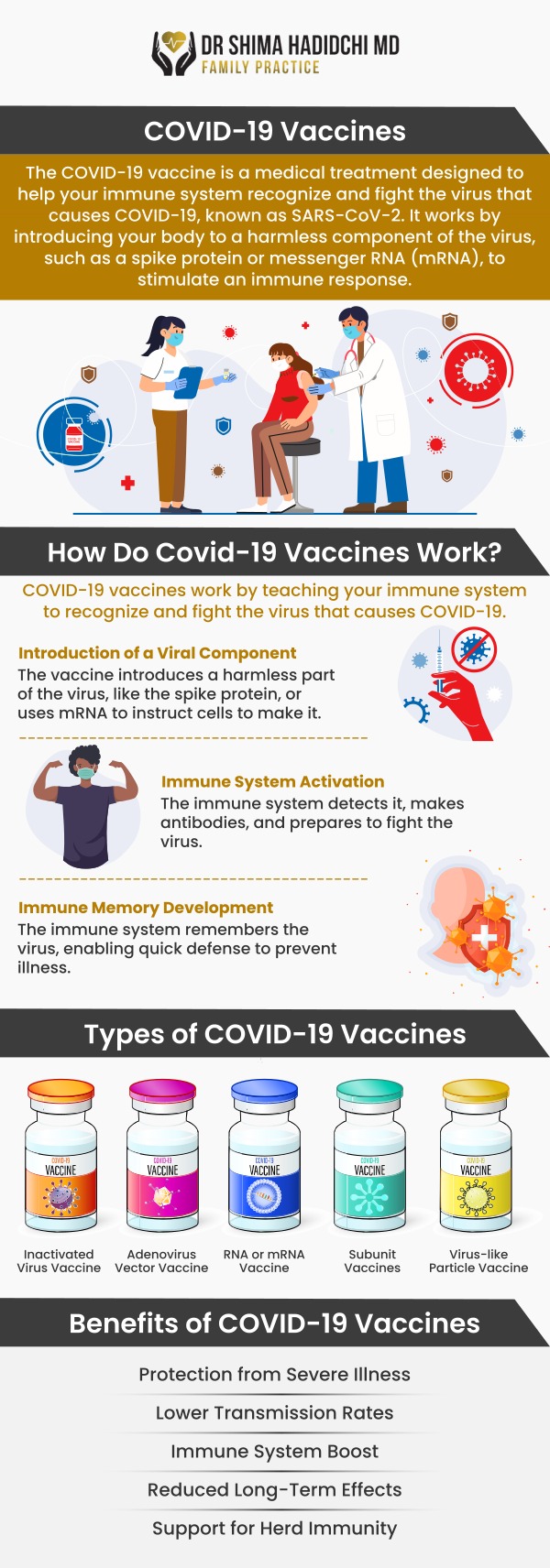
Table of Contents:
Who Is Eligible for the Updated 2026–2027 COVID-19 Vaccine?
What Is Different About the 2026–2027 COVID-19 Vaccines?
Which COVID-19 Vaccines Are Available in the United States for 2026–2027?
Who Is at Greater Risk of Developing Severe COVID-19?
How Effective Are Updated COVID-19 Vaccines Against Severe Illness?
Can Children Aged 6 Months and Older Receive COVID-19 Vaccines?
How Many Doses of the 2026–2027 COVID-19 Vaccine Will I Need?
Do People With Weakened Immune Systems Need Additional COVID-19 Vaccine Doses?
Can I Receive a COVID-19 Vaccine if I Have Already Had COVID-19?
Are COVID-19 Vaccines Safe, and What Side Effects Can Occur?
What Are the Main Contraindications to Receiving a COVID-19 Vaccine?
Is COVID-19 Vaccination Appropriate for Patients With a History of Multisystem Inflammatory Syndrome?
Can I Receive Another COVID-19 Vaccine After Experiencing Myocarditis or Pericarditis?
Should I Delay COVID-19 Vaccination if I Am Currently Sick?
Can I Receive a COVID-19 Vaccine if I Have a History of Allergies?
Can Pregnant or Breastfeeding Patients Receive COVID-19 Vaccines?
What Warning Signs After COVID-19 Vaccination Require Immediate Medical Attention?
What Safety Precautions Should Be Reviewed Before COVID-19 Vaccination?
How Long Should Patients Be Monitored After Receiving a COVID-19 Vaccine?
Can I Receive the COVID-19 Vaccine and Flu Vaccine During the Same Appointment?
What Should I Bring to My COVID-19 Vaccination Appointment?
What Should I Expect During and After a COVID-19 Vaccination Appointment?
How Much Does a COVID-19 Vaccine Cost in 2026–2027?
How Can I Schedule a COVID-19 Vaccination Appointment in Apple Valley, CA?
Medical References
COVID-19 Vaccine Eligibility and Recommendations
The CDC recommends updated COVID-19 vaccination for adults aged 18 and older. Vaccination is also recommended for children aged 6 months through 17 years with moderate or severe immunocompromise. For other children, vaccination involves shared clinical decision-making. FDA-approved indications are narrower for certain age groups and medical conditions, so some CDC-recommended uses are off-label.
The FDA recommended updated monovalent COVID-19 vaccines targeting the XFG variant of the SARS-CoV-2 JN.1 lineage. This formulation is intended to provide a closer match to circulating virus variants. Updated vaccination can strengthen protection against severe illness, although it cannot guarantee prevention of infection or transmission.
Updated COVID-19 vaccine products include Moderna’s Spikevax and mNexspike, Pfizer-BioNTech’s Comirnaty, and Novavax’s Nuvaxovid, now manufactured by Sanofi. These products use mRNA or protein-based technology. FDA-approved indications differ by age and medical risk. Patients should confirm product availability and clinical eligibility before scheduling.
Adults aged 65 and older and individuals with certain underlying health conditions have an increased risk of severe COVID-19. These conditions include diabetes, chronic heart or lung disease, obesity, kidney disease, and weakened immune function. Pregnancy can also increase the risk of complications. Patients with multiple risk factors may particularly benefit from updated vaccination.
COVID-19 vaccines can reduce the risk of severe illness, hospitalization, and death. Effectiveness varies according to age, immune function, circulating variants, and previous infection or vaccination. Protection against infection may decrease over time. Updated vaccination remains especially important for individuals with medical conditions associated with severe COVID-19.
Children aged 6 months and older may receive COVID-19 vaccination when appropriate under CDC guidance and applicable clinical considerations. Vaccination is recommended for children with moderate or severe immunocompromise, while other pediatric vaccination decisions involve shared clinical decision-making. FDA approval varies by age and health risk, and some recommended uses are off-label.
Most adults aged 18–64 who are not immunocompromised are recommended to receive one updated vaccine dose. Adults aged 65 and older are recommended to receive two doses, generally six months apart, although the second dose is outside FDA-approved indications. Children and immunocompromised individuals may need different schedules based on age, vaccine product, and vaccination history.
People with moderate or severe immunocompromise may require additional doses because their immune response to vaccination can be reduced. CDC recommends vaccination for immunocompromised individuals aged 6 months and older. The appropriate schedule depends on age, previous vaccinations, and immune status. Additional doses may be considered following individualized clinical evaluation.
Yes. Previous COVID-19 infection does not eliminate the potential benefits of updated vaccination. Individuals who recently recovered may consider delaying vaccination for up to three months after symptoms began or a positive test if asymptomatic. The timing should reflect individual medical risks, recovery, and exposure circumstances.
COVID-19 Vaccine Safety, Precautions, and Contraindications
COVID-19 vaccines undergo ongoing safety monitoring. Common side effects include injection-site soreness, fatigue, headache, muscle aches, chills, and temporary fever. These symptoms are generally mild to moderate and improve within a few days. Rare serious reactions, including anaphylaxis and myocarditis or pericarditis, have been reported and require medical attention.
A severe allergic reaction, such as anaphylaxis, after a previous COVID-19 vaccine dose or to one of its components is a contraindication to receiving the same vaccine type. An alternative vaccine type may be appropriate following medical assessment. Patients with known vaccine-component allergies should discuss their history with a healthcare professional before vaccination.
Patients who previously experienced multisystem inflammatory syndrome in children (MIS-C) or adults (MIS-A) require additional vaccination precautions. CDC guidance generally favors vaccination after clinical recovery, including return to baseline heart function, and at least 90 days after diagnosis. Earlier vaccination may be considered in selected circumstances by the clinical care team.
Patients who developed myocarditis or pericarditis within three weeks after a previous COVID-19 vaccine dose should generally avoid additional COVID-19 doses. These conditions involve inflammation of the heart muscle or surrounding tissue. If further vaccination is considered following individualized risk assessment, the inflammation must first have resolved, and specialist evaluation may be appropriate.
Patients experiencing moderate or severe acute illness should generally postpone vaccination until their condition has improved. Mild illnesses, such as a minor cold, are not usually reasons to delay vaccination. Individuals with active COVID-19 should postpone their appointment to avoid exposing others. Vaccination timing should be discussed if there are ongoing symptoms or other medical concerns.
Many patients with food, environmental, or medication allergies can receive COVID-19 vaccines. However, a diagnosed allergy to a vaccine component or an immediate allergic reaction following a previous dose requires additional assessment. Depending on the reaction, an alternative vaccine type, specialist consultation, or extended observation may be recommended.
Current CDC guidance recommends COVID-19 vaccination for adults, including pregnant adults. Pregnancy increases the risk of severe COVID-19, but product-specific pregnancy and breastfeeding safety data have limitations. Healthcare professionals should discuss known benefits, potential risks, and remaining uncertainties with pregnant or breastfeeding patients before vaccination.
Severe difficulty breathing, swelling of the throat or tongue, or symptoms of a life-threatening allergic reaction require emergency assistance; call 911. Chest pain, shortness of breath, or a racing or irregular heartbeat after vaccination may indicate myocarditis or pericarditis and require prompt medical evaluation. Persistent or worsening symptoms should not be ignored.
Before vaccination, healthcare professionals should review previous vaccine reactions, relevant allergies, medical conditions, immune status, and vaccination history. Patients should also disclose any previous myocarditis, pericarditis, or multisystem inflammatory syndrome. This screening helps identify contraindications, precautions, and whether additional clinical assessment is necessary before receiving a vaccine.
Most patients should remain under observation for approximately 15 minutes after vaccination. A 30-minute observation period is recommended for certain patients with allergy-related risk factors, including a history of anaphylaxis. Monitoring helps healthcare professionals identify immediate allergic reactions or fainting and provide appropriate assistance.
COVID-19 Vaccination Appointments and Patient Information
Yes. COVID-19 and influenza vaccines can generally be administered during the same appointment when both are appropriate. Receiving both vaccines together may help patients remain current with seasonal vaccination recommendations. Temporary soreness, fatigue, or mild fever may occur. Patients can discuss their medical history and preferred vaccination timing with a healthcare professional.
Patients should bring available vaccination records, insurance information, and identification if requested by the office. They should also share any history of severe allergic reactions, previous vaccine complications, or conditions affecting immune function. Parents or legal guardians accompanying children should be prepared to provide appropriate consent when required.
Before vaccination, healthcare professionals should review eligibility, medical history, and relevant safety precautions. After receiving the vaccine, patients are generally monitored for 15 minutes or longer when indicated. Temporary injection-site soreness, fatigue, or mild fever may occur. Patients should receive guidance about possible adverse reactions and recommended additional doses.
Updated COVID-19 vaccines may be covered without out-of-pocket costs through qualifying private insurance, Medicare, or Medicaid coverage. Eligible children may receive vaccines through the Vaccines for Children program. Some uninsured adults may qualify for public health vaccination assistance. Patients should verify vaccine eligibility, insurance benefits, and applicable charges before scheduling.
Patients interested in COVID-19 vaccination can contact Dr. Shima Hadidchi MD Family Practice to inquire about current vaccine availability, eligibility, and appointment scheduling. Our team can provide information about accepted insurance plans, potential costs, and the documentation needed for your visit. Because vaccine supplies and available products may vary, we recommend confirming availability before visiting the office.
Before your appointment, prepare your vaccination records, insurance information, and relevant medical history, including previous vaccine reactions or severe allergies. Our team can help you understand current CDC recommendations, review important safety precautions, and determine whether additional clinical evaluation is needed. For more information, please contact us today or book an appointment online. We are conveniently located at 18112 Wika Rd, Suite 102, Apple Valley, CA 92307. We serve patients from Apple Valley CA, Victorville CA, Spring Valley Lake CA, Mountain View Acres CA, Hesperia CA, Adelanto CA, Mariana Ranchos CA, and surrounding areas.
This content is based on current clinical guidance and vaccine safety information from the Centers for Disease Control and Prevention (CDC) and the U.S. Food and Drug Administration (FDA).
Centers for Disease Control and Prevention (CDC). Overview of COVID-19 Vaccines and Vaccination.
https://www.cdc.gov/covid/hcp/vaccine-considerations/overview.html
Centers for Disease Control and Prevention (CDC). 2026–2027 COVID-19 Vaccination Guidance for People Who Are Not Immunocompromised.
https://www.cdc.gov/covid/hcp/vaccine-considerations/routine-guidance.html
Centers for Disease Control and Prevention (CDC). COVID-19 Vaccination Guidance for People Who Are Immunocompromised.
https://www.cdc.gov/covid/hcp/vaccine-considerations/immunocompromised.html
Centers for Disease Control and Prevention (CDC). Contraindications and Precautions for COVID-19 Vaccination.
https://www.cdc.gov/covid/hcp/vaccine-considerations/contraindications-precautions.html
Centers for Disease Control and Prevention (CDC). Safety Considerations for COVID-19 Vaccines.
https://www.cdc.gov/covid/hcp/vaccine-considerations/safety-considerations.html
Centers for Disease Control and Prevention (CDC). Clinical Considerations for Special Situations and Populations.
https://www.cdc.gov/covid/hcp/vaccine-considerations/special-situations-and-populations.html
Centers for Disease Control and Prevention (CDC). Running a Vaccination Clinic.
https://www.cdc.gov/vaccines/hcp/clinic-planning/running.html
U.S. Food and Drug Administration (FDA). COVID-19 Vaccines (2026–2027 Formula) for Use in the United States Beginning in Fall 2026.
https://www.fda.gov/vaccines-blood-biologics/industry-biologics/covid-19-vaccines-2026-2027-formula-use-united-states-beginning-fall-2026
Centers for Disease Control and Prevention (CDC). Getting Your COVID-19 Vaccine.
https://www.cdc.gov/covid/vaccines/getting-your-covid-19-vaccine.html

Check Out Our 5 Star Reviews


Additional Services You May Need
▸ Telemedicine
▸ Family Practice And Primary Care
▸ Walk-Ins
▸ Weight Loss Management
▸ Zepbound for Weight Loss
▸ Women’s Health
▸ Vaccinations & Immunizations
▸ Diabetes Management
▸ Geriatrics
▸ Pediatrics
▸ Internal Medicine
▸ Acne Treatment
▸ Cryotherapy Treatment
▸ Skin Lesion Removal
▸ Dementia Treatment
▸ Semaglutide GLP-1 Injections
▸ Flu Shot
Additional Services You May Need
- Telemedicine
- Family Practice And Primary Care
- Walk-Ins
- Weight Loss Management
- Zepbound for Weight Loss
- Women’s Health
- Vaccinations & Immunizations
- Diabetes Management
- Geriatrics
- Pediatrics
- Internal Medicine
- Acne Treatment
- Cryotherapy Treatment
- Skin Lesion Removal
- Dementia Treatment
- Semaglutide GLP-1 Injections
- Flu Shot





 Send Text
 How May I Help You?