

What Causes Frequent Headaches and When Should You See a Doctor?
Frequent headaches can develop for many reasons, including stress, dehydration, poor sleep, migraines, tension, or other underlying health concerns. Some headaches may occur occasionally, while others can become persistent and interfere with daily activities. Tracking headache patterns, triggers, and accompanying symptoms can help identify possible causes. Board-Certified Dr. Shima Hadidchi, MD, and our team can evaluate frequent headaches and recommend appropriate next steps based on individual needs. For more information, please contact us today or book an appointment online. We are conveniently located at 18112 Wika Rd, Suite 102, Apple Valley, CA 92307.
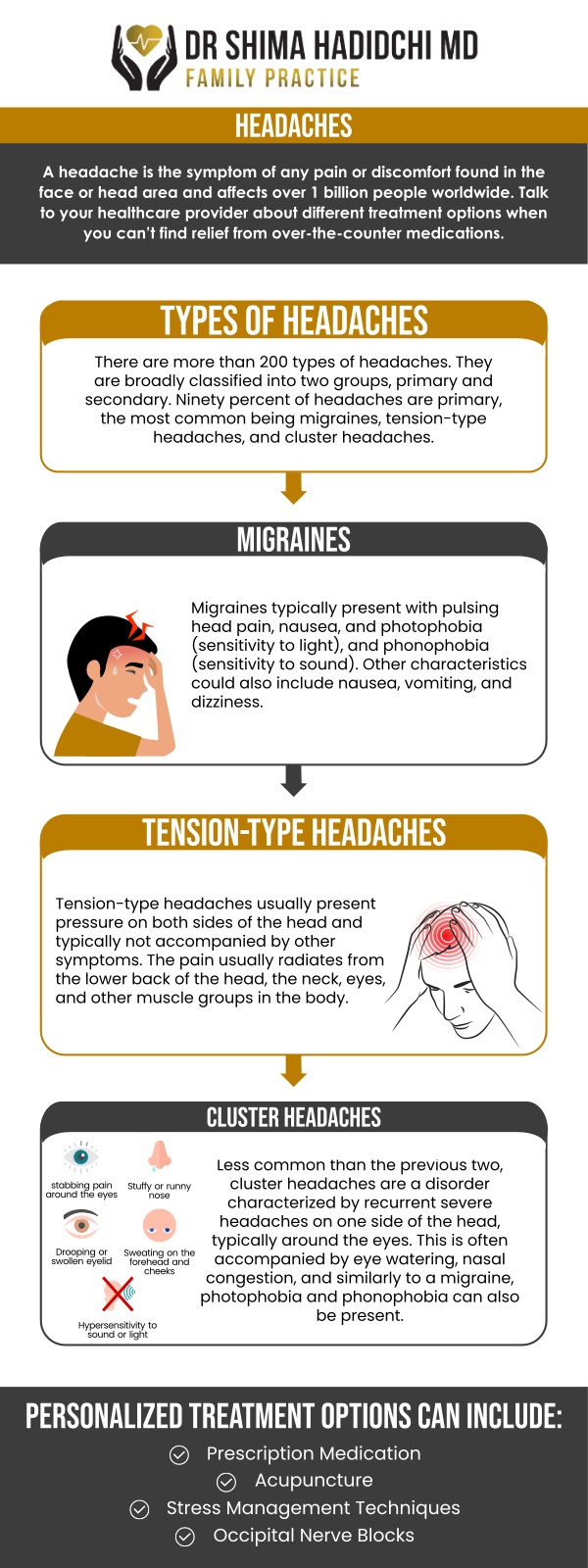
Table of Contents:
What Causes Frequent Headaches and When Should You See a Doctor?
What are the most common causes of frequent headaches?
Why am I getting headaches almost every day?
Can high blood pressure or dehydration cause frequent headaches?
When should frequent headaches be evaluated by a doctor?
Find Answers for Frequent Headaches with Board-Certified Dr. Shima Hadidchi, MD, and the Team
Frequent headaches can affect concentration, sleep, productivity, and overall quality of life. While occasional headaches are common, headaches that repeatedly return may be associated with migraine, muscle tension, dehydration, stress, sleep problems, illness, medication use, vision concerns, or other health factors. Understanding the pattern behind frequent headaches can help determine when medical evaluation may be appropriate.
Headaches can feel different from one person to another. Pain may be dull, throbbing, squeezing, sharp, one-sided, or spread across the head. Through family practice and primary care, our team can review the frequency, location, intensity, duration, triggers, and accompanying symptoms to better understand what may be contributing to recurring discomfort.
Because headaches sometimes occur alongside underlying medical conditions, an individualized evaluation may involve blood pressure measurement, a review of medications, a physical examination, or appropriate in-house lab testing. Keeping track of when headaches occur and what happens before and during each episode can also provide useful information.
Frequent headaches can have many possible causes. Two common primary headache disorders are tension-type headaches and migraine. Tension headaches often produce pressure or a tightening sensation around the head, while migraines may involve moderate to severe throbbing pain and can sometimes occur with nausea or sensitivity to light and sound. Stress, inadequate sleep, skipped meals, certain foods, changes in caffeine intake, and prolonged screen use may contribute to headache patterns in some individuals.
Secondary headaches occur because of another health issue. Possible contributors include dehydration, respiratory infections, sinus inflammation, medication effects, vision problems, head injury, or other medical conditions. Frequent use of certain headache medicines can sometimes contribute to medication-overuse or rebound headaches, making it important to discuss how often pain relievers are being used. Our internal medicine services can help assess headaches in relation to a person’s broader medical history and ongoing health conditions.
Age, lifestyle, and existing health concerns may also influence headache patterns. Our women’s health services can address headaches alongside other health changes when appropriate, while geriatric care can help older adults evaluate newly developing or changing symptoms. Regular annual physical exams also provide an opportunity to discuss headaches that may not initially seem significant.
Headaches occurring nearly every day deserve closer attention because the repeated pattern may provide clues about what is triggering them. Frequent headaches may be associated with chronic migraine, chronic tension-type headaches, inconsistent sleep, stress, dehydration, caffeine changes, missed meals, eye strain, or repeated use of pain-relieving medications. Headaches occurring 15 or more days each month for longer than three months may fall within the broad category of chronic daily headaches, although the specific headache type requires medical evaluation.
A headache diary can be helpful when trying to identify patterns. Recording when the headache begins, how long it lasts, where the pain occurs, what the pain feels like, foods or drinks consumed, sleep quality, stress levels, medications taken, and other symptoms can give our team more useful information. Patients establishing ongoing care can review our information for new patients and learn what to expect during a first visit.
Nearly daily headaches should not automatically be assumed to have one specific cause. A family and primary care physician can review the pattern and determine whether additional testing, medication review, lifestyle changes, or referral for specialized evaluation may be appropriate. Our information about how primary care can help manage overall health also explains the role ongoing medical care can play in identifying changes over time.
Dehydration can contribute to headaches in some individuals. Losing more fluid than the body takes in may occur after strenuous exercise, hot weather exposure, fever, vomiting, diarrhea, or simply inadequate fluid intake. Other signs of dehydration can include thirst, dry mouth, darker urine, fatigue, or dizziness. Headaches associated with dehydration may improve after fluid balance is restored, but persistent or recurring symptoms still warrant consideration of other possible causes.
High blood pressure requires more careful interpretation. Mild or moderately elevated blood pressure usually does not cause obvious symptoms, and many individuals with hypertension feel completely well. Headaches can occur when blood pressure becomes severely elevated, but a headache alone is not a reliable way to determine whether someone has hypertension. Our detailed information on high blood pressure symptoms explains why regular blood pressure measurements are more dependable than symptoms alone.
Headaches may also occur alongside conditions affecting blood glucose, illness, or other aspects of health. Our diabetes management services can help patients address blood sugar concerns, while evaluation for a possible respiratory infection may be appropriate when headache occurs with respiratory symptoms or illness. Eligible older adults can also discuss preventive health concerns during Medicare Annual Wellness Visits.
Frequent headaches should be medically evaluated when they occur more often than usual, progressively worsen, repeatedly interfere with work or sleep, require frequent pain medication, or begin to affect normal daily activities. A new headache pattern may also deserve evaluation, particularly when a person has other medical conditions or when the characteristics of previously familiar headaches suddenly change.
Certain headache symptoms require more urgent attention. A sudden, extremely severe headache, sometimes described as the worst headache a person has experienced, should not be treated as an ordinary recurring headache. Emergency care is also appropriate when severe headache occurs with confusion, fainting, seizures, weakness or numbness, difficulty speaking, difficulty walking, significant vision changes, stiff neck, or other serious neurological symptoms. Headache following a significant head injury may also require prompt assessment.
For non-emergency concerns that need timely attention, our walk-in primary care services can offer another option for accessing an evaluation. Patients can also learn about situations addressed through our urgent care information and walk-in urgent care information. When an in-person examination is not initially required, our telemedicine consultations may provide a convenient way to discuss certain symptoms and determine appropriate next steps.
Board-Certified Dr. Shima Hadidchi, MD, and our team take a personalized approach to evaluating frequent headaches. Rather than assuming every headache has the same cause, Dr. Hadidchi can consider the timing and characteristics of the pain alongside medical history, medications, sleep habits, hydration, stress, blood pressure, recent illnesses, and other symptoms. Patients can also learn more about Dr. Shima Hadidchi, MD and our approach to comprehensive care.
Depending on an individual’s symptoms, an assessment may include vital signs, neurological observations, medication review, blood testing, or other appropriate evaluation. The goal is to identify whether headaches appear consistent with a common headache pattern or whether another medical concern may need further investigation. Our information on choosing a primary care physician and family medicine care can help patients understand the value of continuity when monitoring recurring symptoms.
Our team focuses on helping each patient better understand headache triggers, changes in symptom patterns, and appropriate next steps based on individual findings. Patients can review our accepted insurance information, find our convenient locations, or view our locations map when planning care. If frequent headaches are becoming more intense, occurring more often, or interfering with daily life, an evaluation can help determine what may be contributing to the problem and what type of care may be appropriate. For more information, please contact us today or book an appointment online. We are conveniently located at 18112 Wika Rd, Suite 102, Apple Valley, CA 92307. We serve patients from Apple Valley CA, Victorville CA, Spring Valley Lake CA, Mountain View Acres CA, Hesperia CA, Adelanto CA, Mariana Ranchos CA, and surrounding areas.

Check Out Our 5 Star Reviews


Additional Services You May Need
▸ Telemedicine
▸ Family Practice And Primary Care
▸ Walk-Ins
▸ Weight Loss Management
▸ Zepbound for Weight Loss
▸ Women’s Health
▸ Vaccinations & Immunizations
▸ Diabetes Management
▸ Geriatrics
▸ Pediatrics
▸ Internal Medicine
▸ Acne Treatment
▸ Cryotherapy Treatment
▸ Skin Lesion Removal
▸ Dementia Treatment
▸ Semaglutide GLP-1 Injections
▸ Flu Shot
Additional Services You May Need
- Telemedicine
- Family Practice And Primary Care
- Walk-Ins
- Weight Loss Management
- Zepbound for Weight Loss
- Women’s Health
- Vaccinations & Immunizations
- Diabetes Management
- Geriatrics
- Pediatrics
- Internal Medicine
- Acne Treatment
- Cryotherapy Treatment
- Skin Lesion Removal
- Dementia Treatment
- Semaglutide GLP-1 Injections
- Flu Shot





 Send Text
 How May I Help You?