

What Are the Symptoms of High Blood Pressure?
High blood pressure often develops without noticeable symptoms, making routine blood pressure checks especially important. Some people may experience headaches, blurred vision, shortness of breath, dizziness, or occasional nosebleeds when their blood pressure becomes severely elevated. Other health concerns can also cause these symptoms, so they should not be used to diagnose hypertension without proper testing. Board-Certified Dr. Shima Hadidchi, MD, can provide personalized evaluations to detect elevated blood pressure early and help reduce the risk of heart, kidney, brain, and blood vessel complications. For more information, please contact us today or book an appointment online. We are conveniently located at 18112 Wika Rd, Suite 102, Apple Valley, CA 92307.
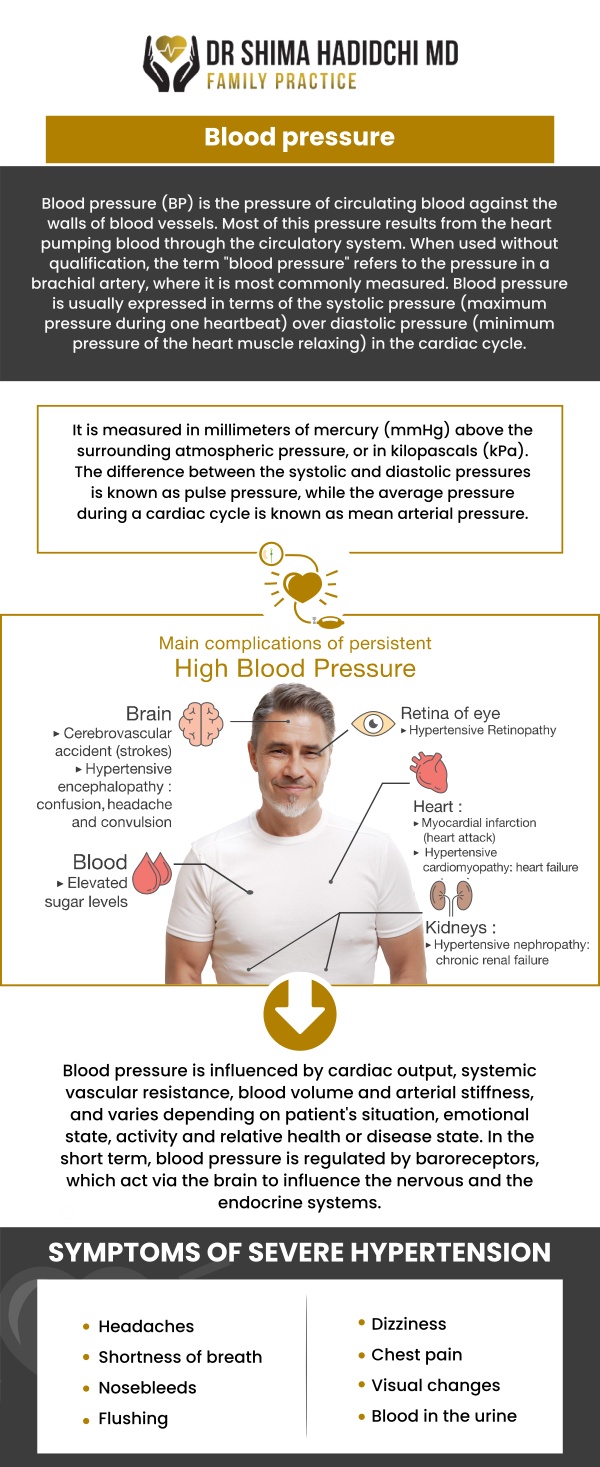
Table of Contents:
What are the early symptoms of high blood pressure?
Can high blood pressure occur without noticeable symptoms?
Can headaches be a symptom of high blood pressure?
Does high blood pressure cause dizziness or lightheadedness?
How can patients check their blood pressure accurately at home?
When does high blood pressure require emergency care?
Identifying High Blood Pressure Symptoms With Board-Certified Dr. Shima Hadidchi, MD, and the Team in Apple Valley, CA
High blood pressure, also called hypertension, often develops without obvious warning signs. A person may feel completely well while elevated blood pressure gradually places additional strain on the heart, blood vessels, brain, kidneys, and eyes. Regular blood pressure screening is therefore the most reliable way to identify the condition.
Board-Certified Dr. Shima Hadidchi, MD, and the team in Apple Valley, CA, provide personalized evaluations for patients who have elevated readings, possible hypertension symptoms, a family history of high blood pressure, or concerns about their cardiovascular health. Each evaluation considers the patient’s current readings, medical history, lifestyle, symptoms, risk factors, and long-term wellness needs.
High blood pressure usually does not cause recognizable symptoms during its early stages. Many patients discover that their blood pressure is elevated during an annual physical, routine health screening, preoperative examination, or appointment for an unrelated concern.
Although some people report headaches, fatigue, blurred vision, shortness of breath, dizziness, or a pounding sensation in the chest or head, these symptoms do not necessarily mean that a person has hypertension. They can also be associated with dehydration, stress, poor sleep, anxiety, infections, vision problems, or other medical conditions.
The only dependable way to determine whether blood pressure is elevated is to measure it correctly. Blood pressure is generally considered high when readings are consistently 130/80 mm Hg or higher. One elevated result does not always confirm hypertension because pain, physical activity, caffeine, stress, and nervousness may temporarily affect a reading. Repeated measurements provide a more accurate understanding of a patient’s usual blood pressure.
Dr. Hadidchi can review a patient’s office measurements and home blood pressure records to identify meaningful patterns. This personalized approach helps distinguish ongoing hypertension from temporary increases caused by stress, illness, discomfort, or other circumstances.
Yes. High blood pressure can remain present for months or years without causing noticeable symptoms. This is why hypertension is frequently described as a silent condition. Feeling healthy does not necessarily mean that a person’s blood pressure is within a healthy range.
High blood pressure can quietly damage blood vessels and increase the risk of serious health complications. Over time, uncontrolled hypertension may contribute to heart disease, stroke, kidney problems, vision damage, and other cardiovascular concerns. Regular screening allows patients to recognize elevated blood pressure before complications develop.
Patients may have a higher risk of hypertension if they have a family history of the condition, diabetes, kidney concerns, excess weight, limited physical activity, a high-sodium diet, tobacco exposure, poor sleep, or increasing age. However, high blood pressure can affect adults who do not have obvious risk factors.
During an appointment in Apple Valley, Dr. Hadidchi and the team can evaluate a patient’s personal risk factors and explain what their blood pressure numbers mean. Patients may also receive guidance on home monitoring, healthy eating, physical activity, sleep, stress management, and follow-up care based on their individual health needs.
Headaches can sometimes occur when blood pressure becomes dangerously high, but ordinary or moderately elevated blood pressure usually does not cause headaches. For this reason, headaches should not be used as the primary way to determine whether someone has hypertension.
Head pain may result from migraines, muscle tension, sinus pressure, dehydration, inadequate sleep, missed meals, stress, or vision problems. Pain and anxiety may also temporarily increase blood pressure. In some cases, a patient may assume that hypertension caused the headache when the discomfort itself contributed to the elevated reading.
Patients experiencing recurring headaches should record when the headaches occur, how long they last, what other symptoms are present, and whether a blood pressure reading was taken at the time. This information can help Dr. Hadidchi determine whether the headaches may be associated with blood pressure changes or require evaluation for another possible cause.
A sudden and severe headache can be an emergency when it occurs with extremely high blood pressure, difficulty breathing, chest pain, weakness, numbness, confusion, vision changes, or difficulty speaking. These symptoms may indicate a hypertensive emergency or another serious condition requiring immediate medical attention.
Dizziness and lightheadedness are not considered reliable early symptoms of high blood pressure. These sensations have many possible causes, including dehydration, low blood sugar, anemia, inner-ear conditions, anxiety, irregular heart rhythms, medication effects, or a sudden drop in blood pressure when standing.
Patients who are already receiving treatment for hypertension may occasionally feel lightheaded if their blood pressure becomes too low or changes quickly. Symptoms may also occur after a dosage adjustment, during illness, or when a person has not consumed enough fluids. Patients should not stop or change prescribed treatment without first discussing their symptoms with a medical professional.
When evaluating dizziness, Dr. Hadidchi may ask when the sensation started, how long it lasts, whether standing or changing position triggers it, and whether it occurs with nausea, weakness, headaches, heart palpitations, or vision changes. Blood pressure and pulse measurements may also be taken while the patient is sitting, lying down, or standing.
Sudden dizziness accompanied by facial drooping, one-sided weakness, difficulty speaking, fainting, severe headache, chest pain, or breathing difficulty requires emergency care. These symptoms should not be assumed to be routine effects of hypertension.
Home blood pressure monitoring can help patients and their medical team understand how readings change outside the clinical setting. Patients should use a validated upper-arm monitor with a cuff that fits correctly.
Before taking a reading, the patient should rest quietly for several minutes, avoid talking, place both feet flat on the floor, support the back, and keep the arm positioned near heart level. Exercise, tobacco, and caffeinated beverages may temporarily affect a measurement, so patients should follow the monitoring instructions provided by their medical team.
It can be helpful to take readings at approximately the same times each day and record the date, time, systolic number, diastolic number, pulse, symptoms, and relevant circumstances. Patients should bring this record and their home monitor to an appointment so Dr. Hadidchi can review their technique and determine whether the readings are consistent.
A blood pressure reading higher than 180/120 mm Hg is considered severely elevated. Patients should wait briefly and repeat the measurement according to medical guidance. If the second reading remains extremely high, they should contact a medical professional promptly.
A reading above 180/120 mm Hg accompanied by chest pain, shortness of breath, severe headache, weakness, numbness, back pain, vision changes, confusion, or difficulty speaking may represent a hypertensive emergency. Emergency medical assistance should be requested immediately rather than waiting for a regular appointment. Visit the ER if emergency medical assistance is required.
Dr. Shima Hadidchi, MD, and the team in Apple Valley take a patient-centered approach to evaluating possible hypertension. The assessment may include repeated blood pressure measurements, a review of home readings, a physical examination, and a discussion of the patient’s medical history, family history, nutrition, activity, sleep, stress, medications, and symptoms.
Depending on the patient’s needs, additional testing may be recommended to evaluate heart health, kidney function, blood sugar, cholesterol, or other factors that can influence blood pressure. The goal is not simply to identify an elevated number but to understand the patient’s overall cardiovascular risk and determine what type of support may be appropriate.
Patients can prepare for their visit by bringing a list of medications and supplements, recent blood pressure readings, and notes describing headaches, dizziness, vision changes, chest discomfort, breathing difficulties, or other concerns. These details allow Dr. Hadidchi and the team to provide recommendations that reflect the patient’s individual health needs.
Because high blood pressure frequently causes no symptoms, patients should not wait until they feel unwell to have their readings checked. Routine evaluation with Board-Certified Dr. Shima Hadidchi, MD, and the team in Apple Valley, CA, can help patients understand their numbers, recognize personal risk factors, and take informed steps toward protecting their long-term health. For more information, please contact us today or book an appointment online. We are conveniently located at 18112 Wika Rd, Suite 102, Apple Valley, CA 92307. We serve patients from Apple Valley CA, Victorville CA, Spring Valley Lake CA, Mountain View Acres CA, Hesperia CA, Adelanto CA, Mariana Ranchos CA, and surrounding areas.

Check Out Our 5 Star Reviews


Additional Services You May Need
▸ Telemedicine
▸ Family Practice And Primary Care
▸ Walk-Ins
▸ Weight Loss Management
▸ Zepbound for Weight Loss
▸ Women’s Health
▸ Vaccinations & Immunizations
▸ Diabetes Management
▸ Geriatrics
▸ Pediatrics
▸ Internal Medicine
▸ Acne Treatment
▸ Cryotherapy Treatment
▸ Skin Lesion Removal
▸ Dementia Treatment
▸ Semaglutide GLP-1 Injections
▸ Flu Shot
Additional Services You May Need
- Telemedicine
- Family Practice And Primary Care
- Walk-Ins
- Weight Loss Management
- Zepbound for Weight Loss
- Women’s Health
- Vaccinations & Immunizations
- Diabetes Management
- Geriatrics
- Pediatrics
- Internal Medicine
- Acne Treatment
- Cryotherapy Treatment
- Skin Lesion Removal
- Dementia Treatment
- Semaglutide GLP-1 Injections
- Flu Shot





 Send Text
 How May I Help You?