

What Is the Mechanism of Action of Zepbound?
Zepbound contains tirzepatide, a medication that activates both GIP and GLP-1 receptors involved in appetite regulation and food intake. Its effects can help decrease calorie consumption, influence glucose-dependent insulin release, reduce glucagon secretion, and temporarily slow gastric emptying. Board-Certified Dr. Shima Hadidchi, MD, and our team in Victorville, CA, can determine whether Zepbound may be appropriate based on a patient’s medical history, weight-management needs, health conditions, and treatment goals. For more information, contact us or request an appointment online. We are conveniently located at 12740 Hesperia Rd, Suite A, Victorville, CA 92395.
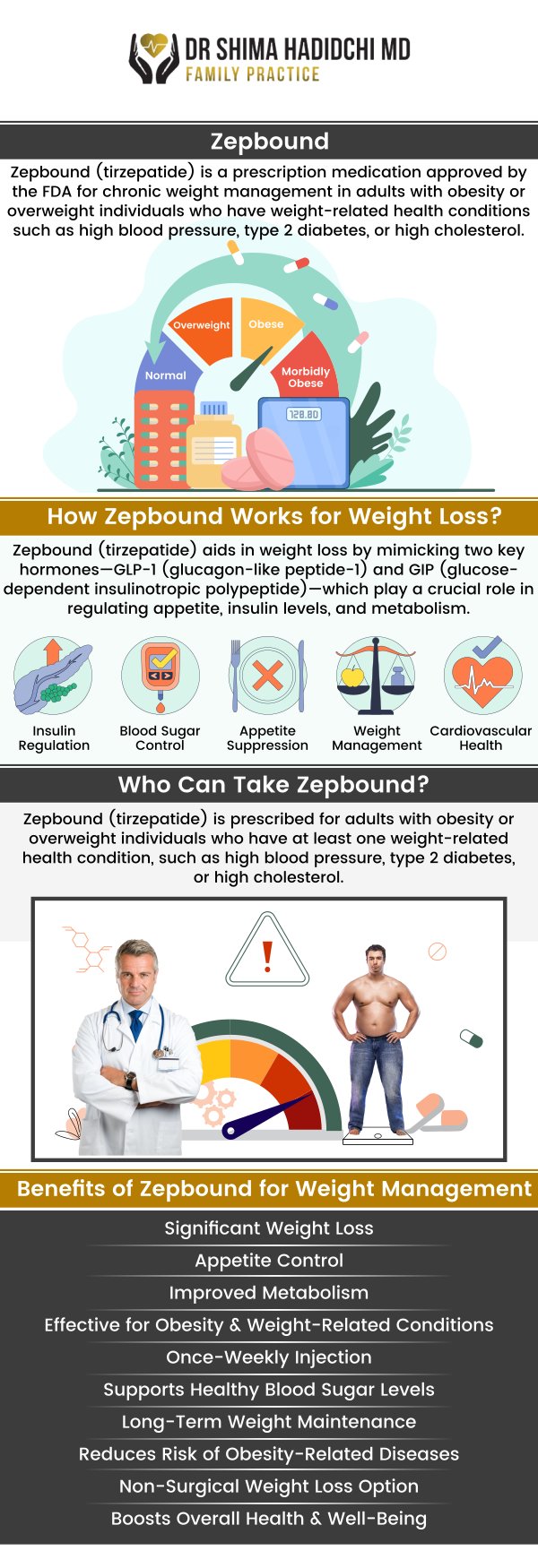
Table of Contents:
How does Zepbound interact with GLP-1 and GIP receptors?
How does Zepbound help regulate appetite and hunger signals?
How long does it take for Zepbound’s effects to begin?
Can Zepbound’s mechanism of action vary between individuals?
Understanding Zepbound Mechanism of Action With Board-Certified Dr. Shima Hadidchi, MD, and the Team in Victorville, CA
Zepbound contains tirzepatide, a medication designed to activate two hormone receptors: glucose-dependent insulinotropic polypeptide, or GIP, and glucagon-like peptide-1, or GLP-1. These receptors are involved in appetite regulation, calorie intake, and glucose-dependent insulin secretion.
By stimulating both receptor pathways, Zepbound can reduce food intake while supporting the body’s response to rising blood sugar after meals. It can also lower glucagon secretion in a glucose-dependent manner and delay stomach emptying, particularly after the first dose, although that effect generally becomes less pronounced over time.
At Dr. Shima Hadidchi’s practice in Victorville, CA, patients receive an individualized evaluation before Zepbound is prescribed. Dr. Hadidchi reviews medical history, current medications, weight-related conditions, treatment goals, and possible contraindications. She also explains how the dual-receptor mechanism differs from medications that target only GLP-1 receptors and monitors each patient’s tolerance, progress, and dosage needs throughout a carefully supervised course of personalized weight management and ongoing treatment.
Zepbound helps regulate appetite by activating GLP-1 and GIP receptors, which are involved in hunger, fullness, and food intake. Its active ingredient, tirzepatide, imitates hormones naturally released after eating, helping the brain recognize fullness sooner and making it easier to feel satisfied with smaller portions.
The medication may also slow the movement of food from the stomach into the intestines, allowing fullness to last longer after meals. By reducing the frequency and intensity of hunger signals, Zepbound can help patients manage calorie intake and follow healthier eating habits as part of a medically supervised weight-management program.
Dr. Shima Hadidchi and our team evaluate each patient’s medical history, weight-related concerns, medications, and treatment goals before recommending Zepbound. Regular follow-up visits help monitor appetite changes, progress, side effects, and dosage needs while supporting safe and sustainable weight management.
Zepbound begins working in the body after the first weekly injection, although the timing of noticeable effects differs among patients. Tirzepatide generally reaches its highest concentration in the bloodstream approximately 8 to 72 hours after a dose. Some people may notice reduced hunger or increased fullness within the first several days, while others may require more time.
Weight loss usually develops gradually rather than immediately. Zepbound is started at a low dose and increased in stages to help the body adjust and reduce gastrointestinal side effects. The medication reaches steady levels in the body after approximately four weeks of once-weekly use, but meaningful weight changes may continue over several months.
At Dr. Shima Hadidchi MD Family Practice in Victorville, CA, patients receive regular monitoring to evaluate appetite changes, weight trends, side effects, and treatment tolerance. Dr. Shima Hadidchi and our professional team can adjust the dosage when appropriate and provide personalized guidance to support safe, consistent, and sustainable progress.
Zepbound activates the same GIP and GLP-1 receptors in each patient, but individual responses can differ. Factors that may affect how the medication feels or performs include:
• Dosage level: Patients may respond differently as the weekly dose is gradually increased.
• Metabolism: The body may absorb, process, and eliminate tirzepatide at different rates.
• Appetite response: Some people experience reduced hunger early, while others notice gradual changes.
• Gastric emptying: Zepbound slows stomach emptying, but the strength and duration of this effect may vary.
• Medical history: Diabetes, digestive conditions, and other health concerns may influence treatment tolerance.
• Current medications: Other medicines can affect blood sugar, digestion, side effects, or overall treatment planning.
• Lifestyle habits: Nutrition, physical activity, sleep, and consistency with weekly injections can influence results.
• Side-effect sensitivity: Nausea, constipation, diarrhea, abdominal discomfort, and appetite reduction differ among patients.
Dr. Shima Hadidchi and our team evaluate each patient’s health history, medication use, treatment response, side effects, and weight-management goals. Regular monitoring allows the dosage and care plan to be adjusted according to the patient’s individual progress and tolerance.
Board-Certified Dr. Shima Hadidchi, MD, helps patients understand how Zepbound works before incorporating it into a medically supervised weight-management plan. Zepbound contains tirzepatide, which activates both GIP and GLP-1 receptors involved in regulating appetite and food intake. This dual action may decrease calorie consumption, support glucose-dependent insulin release, reduce glucagon secretion, and temporarily slow stomach emptying.
Dr. Hadidchi and our skilled team in Victorville, CA, carefully review each patient’s medical history, weight-related concerns, current medications, treatment goals, and possible risk factors before recommending Zepbound. They also provide guidance regarding dosage progression, nutrition, physical activity, potential side effects, and ongoing monitoring. This physician-led approach helps ensure that treatment is personalized, medically appropriate, and supported by consistent follow-up throughout the patient’s weight-management journey.
For more information, contact us or request an appointment online. We are conveniently located at 12740 Hesperia Rd, Suite A, Victorville, CA 92395. We serve patients from Victorville CA, Apple Valley CA, Spring Valley Lake CA, Hesperia CA, Baldy Mesa CA, Adelanto CA, and surrounding areas.

Check Out Our 5 Star Reviews


Additional Services You May Need
▸ Telemedicine
▸ Family Practice And Primary Care
▸ Walk-Ins
▸ Weight Loss Management
▸ Zepbound for Weight Loss
▸ Women’s Health
▸ Vaccinations & Immunizations
▸ Diabetes Management
▸ Geriatrics
▸ Pediatrics
▸ Internal Medicine
▸ Acne Treatment
▸ Cryotherapy Treatment
▸ Skin Lesion Removal
▸ Dementia Treatment
▸ Semaglutide GLP-1 Injections
▸ Flu Shot
Additional Services You May Need
- Telemedicine
- Family Practice And Primary Care
- Walk-Ins
- Weight Loss Management
- Zepbound for Weight Loss
- Women’s Health
- Vaccinations & Immunizations
- Diabetes Management
- Geriatrics
- Pediatrics
- Internal Medicine
- Acne Treatment
- Cryotherapy Treatment
- Skin Lesion Removal
- Dementia Treatment
- Semaglutide GLP-1 Injections
- Flu Shot





 Send Text
 How May I Help You?