

How Do You Use the Ozempic Pen for the First Time?
Using the Ozempic pen for the first time involves preparing the pen, attaching a new needle, checking medication flow, and selecting the prescribed dose. The injection is given under the skin of the abdomen, thigh, or upper arm while following the manufacturer’s instructions. Patients should never change their dose or injection schedule without medical guidance, especially when Ozempic is part of a weight management plan. Board-Certified Dr. Shima Hadidchi, MD, and our team can provide personalized guidance to help patients use the Ozempic pen safely and confidently. For more information, please contact us today or book an appointment online. We are conveniently located at 18112 Wika Rd, Suite 102, Apple Valley, CA 92307.
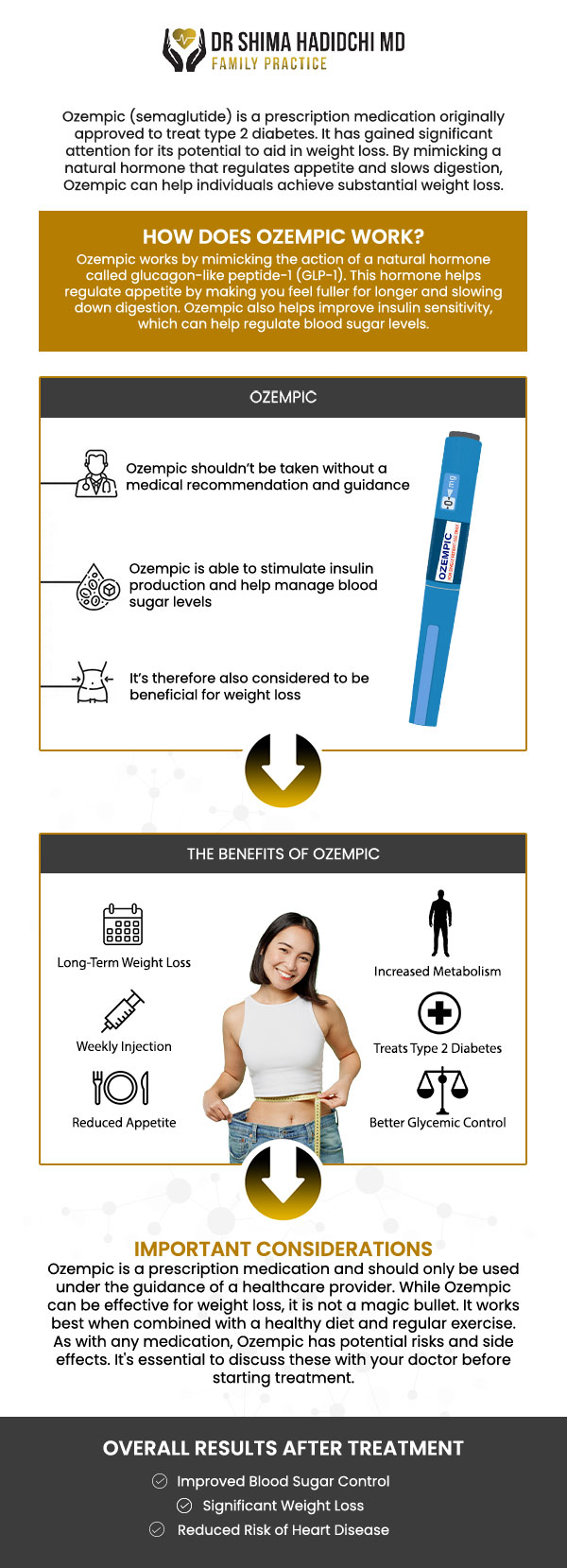
Table of Contents:
How Do You Use the Ozempic Pen for the First Time?
How do you prepare an Ozempic pen for the first injection?
Where should you inject Ozempic for the first time?
What should you know before giving yourself your first Ozempic injection?
What should you do after giving your first Ozempic injection?
Get Started With Your Ozempic Pen With Guidance From Board-Certified Dr. Shima Hadidchi, MD, and the Team
Learning how to use the Ozempic pen for the first time is an important part of beginning a medically supervised weight management plan when Ozempic has been prescribed. Ozempic contains Semaglutide, a GLP-1 receptor agonist that can influence appetite, fullness, and digestion. Although Ozempic is FDA-approved for specific uses in adults with type 2 diabetes and related cardiovascular and kidney indications—not specifically for chronic weight management—physicians may prescribe medications off-label when medically appropriate.
Using the pen correctly helps ensure the prescribed dose is delivered as intended. Patients beginning Semaglutide treatment should understand how to prepare the pen, attach a new needle, perform the first-use flow check, select the prescribed dose, choose an injection site, and safely handle the pen afterward. Our information on preparing for your first Ozempic shot provides additional guidance for patients who are just getting started.
Medication is only one component of a successful weight management strategy. Our team may combine medical supervision with nutrition guidance, physical activity recommendations, behavioral changes, and ongoing progress monitoring. Patients can also learn more about how Ozempic may support weight loss and the role of Semaglutide GLP-1 injections for weight loss.
Before giving your first injection, confirm that you have the correct Ozempic pen and understand the dose prescribed by your physician. Check the medication through the pen window. It should appear clear and colorless. Do not use the pen if the solution appears cloudy, colored, or contains particles.
Wash your hands before handling the medication. Attach a new needle according to the manufacturer’s instructions, removing the paper tab and securely attaching the needle to the pen. Remove both needle caps before proceeding. A new needle should be used with every injection, and an Ozempic pen should never be shared with another person, even if the needle is changed.
When using a new Ozempic pen for the first time, perform the manufacturer’s flow check before administering the dose. This step confirms that medication can flow through the pen and needle properly. Once the flow has been confirmed, select only the dose prescribed for you. Do not change your dose based on appetite changes, weight fluctuations, or how quickly you want to lose weight.
Patients using Semaglutide as part of medical weight management can also review BMI and the role of Semaglutide GLP-1. Our team considers BMI alongside medical history, weight-related conditions, medications, previous weight management efforts, and individual goals when determining an appropriate treatment strategy.
Ozempic is administered as a subcutaneous injection, meaning the medication is injected into the fatty tissue beneath the skin. Approved injection areas include the abdomen, thigh, or upper arm. The medication should not be injected into a vein or muscle.
For the first injection, choose an area that is comfortable and easy to reach. Rotate injection locations from dose to dose instead of repeatedly using exactly the same spot. Avoid injecting into skin that is bruised, irritated, tender, scarred, or otherwise unhealthy.
After inserting the needle, press and hold the dose button until the dose counter displays zero. Keep the needle in the skin while slowly counting to six before removing it. Following the complete administration process helps make sure the intended dose has been delivered.
Patients should remember that the injection site itself does not determine how much weight will be lost from a particular body area. Ozempic does not selectively reduce abdominal, thigh, or arm fat based on where it is injected. Weight changes occur systemically as part of the body’s response to medication, calorie intake, activity, metabolic factors, and overall treatment adherence.
Our team can also explain how GLP-1 medications relate to Ozempic and how weekly injections may be integrated with primary care and weight loss support.
Before using an Ozempic pen for the first time, make sure you understand your prescribed starting dose, weekly schedule, storage requirements, and potential side effects. Ozempic is generally administered once weekly on the same day, as prescribed. The manufacturer currently describes a starting injection dose of 0.25 mg once weekly for four weeks for its approved type 2 diabetes indication, followed by dose escalation according to the prescribing plan. Patients should follow their own prescription rather than independently copying a standard schedule.
For patients focused on weight management, it is important to have realistic expectations. Semaglutide GLP- 1 can influence appetite regulation and feelings of fullness, which may make it easier for some people to reduce calorie intake. However, medication should support—not replace—healthy eating habits, appropriate physical activity, sleep, and other sustainable lifestyle changes.
Before beginning treatment, discuss your medical history and current medications with your physician. Important considerations include a personal or family history of medullary thyroid carcinoma, Multiple Endocrine Neoplasia syndrome type 2, previous serious hypersensitivity reactions to Semaglutide GLP- 1, pancreatitis concerns, kidney problems, gallbladder disease, diabetic retinopathy, pregnancy plans, and medications that may affect blood glucose. Ozempic carries a boxed warning concerning thyroid C-cell tumors and is contraindicated in people with a personal or family history of MTC or MEN 2.
Our in-house lab testing may help evaluate relevant health markers before or during medically supervised treatment. Patients can also learn about who may qualify for Semaglutide GLP-1 weight loss treatment and review information about Ozempic BMI requirements and eligibility.
After completing your first injection, carefully remove the needle and dispose of it in an FDA-cleared sharps container or according to applicable local sharps-disposal guidance. Do not leave a used needle attached to the pen between doses. Replace the pen cap and store the medication according to the manufacturer’s directions.
Pay attention to how you feel during the days following your first injection. Common Ozempic side effects include nausea, vomiting, diarrhea, abdominal pain, and constipation. Digestive symptoms can be particularly noticeable when treatment begins or when the dosage is increased.
Weight-loss-focused habits can be especially helpful during this adjustment period. Eating slowly, recognizing fullness, choosing nutrient-dense foods, maintaining adequate hydration, and avoiding unnecessarily large meals may help support a sustainable calorie-controlled eating pattern. Our guide to the first week of Semaglutide GLP-1 treatment provides additional information about adjusting to therapy.
Do not increase your dose simply because you do not notice immediate weight loss after the first injection. Weight management is a gradual process, and treatment response varies between individuals. Our team can monitor changes in weight, appetite, side effects, eating patterns, and other health markers before deciding whether any adjustment is appropriate.
Seek prompt medical attention for serious or concerning symptoms, including severe persistent abdominal pain, signs of a severe allergic reaction, or significant symptoms of dehydration. Questions or unexpected reactions should be discussed with our team rather than making medication changes independently.
Board-Certified Dr. Shima Hadidchi, MD, and our team can help patients understand how a prescribed Ozempic pen may fit into an individualized medical weight management strategy. Before treatment begins, Dr. Hadidchi can review your health history, BMI, current medications, previous weight loss attempts, metabolic health, and personal goals to determine whether Semaglutide GLP-1 or another treatment option may be appropriate.
Our approach extends beyond teaching patients how to administer an injection. Weight management may also involve nutritional adjustments, physical activity, behavioral changes, realistic goal setting, progress monitoring, and regular follow-up. Patients can explore how to qualify for Ozempic for weight loss or learn about our comprehensive Semaglutide GLP-1 package.
Because Ozempic itself is not FDA-approved specifically for chronic weight management, patients whose primary treatment goal is weight reduction should discuss all appropriate options with Board-Certified Dr. Shima Hadidchi, MD. Wegovy is another Semaglutide GLP- 1 product with FDA-approved indications that include reducing excess body weight and maintaining weight reduction long term in eligible patients.
Our team focuses on helping patients use prescribed medication correctly while building sustainable habits that can support long-term weight management. With appropriate medical evaluation, clear injection instructions, consistent follow-up, and an individualized lifestyle strategy, patients can begin their weight management journey with greater confidence and a better understanding of how their treatment fits into broader health goals. For more information, please contact us today or book an appointment online. We are conveniently located at 18112 Wika Rd, Suite 102, Apple Valley, CA 92307. We serve patients from Apple Valley CA, Victorville CA, Spring Valley Lake CA, Mountain View Acres CA, Hesperia CA, Adelanto CA, Mariana Ranchos CA, and surrounding areas.

Check Out Our 5 Star Reviews


Additional Services You May Need
▸ Telemedicine
▸ Family Practice And Primary Care
▸ Walk-Ins
▸ Weight Loss Management
▸ Zepbound for Weight Loss
▸ Women’s Health
▸ Vaccinations & Immunizations
▸ Diabetes Management
▸ Geriatrics
▸ Pediatrics
▸ Internal Medicine
▸ Acne Treatment
▸ Cryotherapy Treatment
▸ Skin Lesion Removal
▸ Dementia Treatment
▸ Semaglutide GLP-1 Injections
▸ Flu Shot
Additional Services You May Need
- Telemedicine
- Family Practice And Primary Care
- Walk-Ins
- Weight Loss Management
- Zepbound for Weight Loss
- Women’s Health
- Vaccinations & Immunizations
- Diabetes Management
- Geriatrics
- Pediatrics
- Internal Medicine
- Acne Treatment
- Cryotherapy Treatment
- Skin Lesion Removal
- Dementia Treatment
- Semaglutide GLP-1 Injections
- Flu Shot





 Send Text
 How May I Help You?