

What Are the Early Signs of Prediabetes?
Early signs of prediabetes can be subtle and may develop without noticeable symptoms. Some individuals may experience increased thirst, frequent urination, fatigue, or increased hunger as blood sugar levels begin to rise. Board-Certified Dr. Shima Hadidchi, MD, can evaluate risk factors and recommend appropriate blood testing to identify prediabetes early. Timely detection can support lifestyle changes, ongoing monitoring, and personalized care to help reduce the risk of developing type 2 diabetes. For more information, please contact us today or book an appointment online. We are conveniently located at 18112 Wika Rd, Suite 102, Apple Valley, CA 92307.
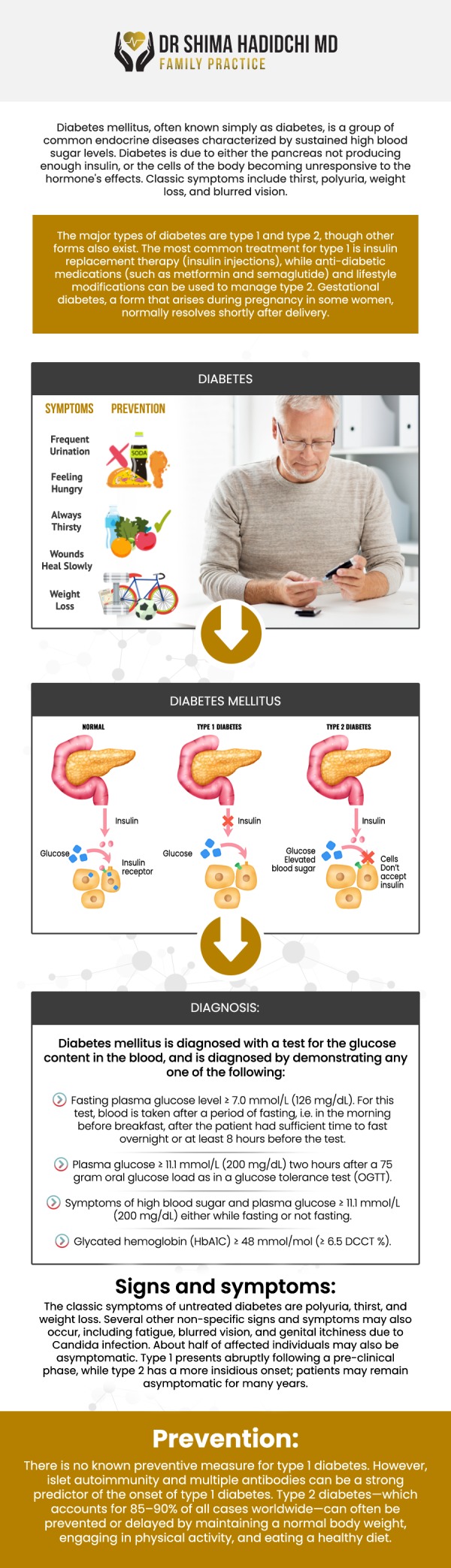
Table of Contents:
What are the early signs of prediabetes?
What are the most common symptoms of prediabetes?
Can prediabetes cause fatigue or increased thirst?
Can you have prediabetes without noticeable symptoms?
What blood tests can confirm whether you have prediabetes?
How Can Board-Certified Dr. Shima Hadidchi, MD, and the Team Help Identify and Manage Prediabetes Early?
Prediabetes develops when blood glucose levels rise above the normal range but have not yet reached the level used to diagnose type 2 diabetes. Because changes in blood sugar can develop gradually, understanding the early signs of prediabetes and knowing when to consider testing can help individuals address metabolic health concerns sooner.
Prediabetes often develops silently, which makes routine preventive care especially important. Our diabetes management services, annual physical exams, and in-house lab testing can help identify changes that may not produce obvious symptoms. Through personalized family and primary care, health history, lifestyle factors, blood test results, and individual risk factors can be considered together.
Early identification provides an opportunity to discuss nutrition, physical activity, weight management, sleep, and other health factors before blood glucose levels progress further. Regular monitoring can also help determine whether lifestyle changes are producing meaningful improvements over time.
Prediabetes usually does not cause a clear or predictable group of symptoms. Many individuals feel completely normal even while blood glucose levels are gradually increasing. When symptoms are present, they can be subtle and may include increased hunger, tiredness, more frequent urination, increased thirst, or difficulty maintaining consistent energy throughout the day. These symptoms are not specific to prediabetes and can occur for many other reasons.
Some people become aware of abnormal blood glucose only after routine testing performed as part of internal medicine care or a preventive visit with a family and primary care physician. Risk may be higher in people with excess body weight, a family history of type 2 diabetes, limited physical activity, a history of gestational diabetes, or certain metabolic conditions.
Individual health needs can also change with age and life stage. Our women’s health services can address metabolic concerns alongside other preventive needs, while our geriatric care helps older adults monitor chronic disease risks and overall wellness. Symptoms alone should not be used to determine whether prediabetes is present; appropriate blood testing is much more reliable.
Fatigue can occur in people with abnormal blood glucose levels, but feeling tired does not automatically mean that someone has prediabetes. Energy levels can be affected by inadequate sleep, stress, dehydration, anemia, thyroid concerns, medications, dietary habits, infections, and numerous other medical factors. A medical evaluation can help determine what may be contributing to persistent fatigue.
Increased thirst can also occur when blood glucose becomes elevated, particularly as glucose abnormalities become more significant. However, pronounced thirst and frequent urination are more commonly associated with higher blood sugar levels rather than mild prediabetes. Anyone experiencing persistent or worsening symptoms should consider a medical evaluation rather than assuming the cause based on symptoms alone. Our telemedicine services may provide a convenient starting point for discussing certain concerns, while walk-in care may be useful when an in-person assessment is appropriate.
Because body composition and metabolic health can influence diabetes risk, patients may also benefit from understanding their weight-related health factors. Our BMI calculator can provide a general reference, while medically supervised weight loss management may be considered when weight reduction is appropriate for an individual’s overall health goals.
Yes. It is very common to have prediabetes without experiencing noticeable symptoms. Blood glucose may remain mildly elevated for an extended period without causing changes that are easy to recognize. This is one reason routine screening can be important, particularly for individuals who have recognized risk factors.
Establishing an ongoing relationship through family medicine care allows health trends to be reviewed over time rather than relying on how someone feels at one particular moment. Individuals who are establishing care can review our information for new patients to better understand available services and preventive healthcare options.
Preventive visits may be especially valuable because blood pressure, weight, family history, medications, previous laboratory results, and lifestyle factors can be considered together. Eligible older adults may also discuss preventive health needs through Medicare Annual Wellness Visits. Identifying prediabetes before symptoms develop can provide more time to make sustainable lifestyle adjustments and monitor whether glucose levels improve.
Several blood tests may be used to identify prediabetes. An A1C test estimates average blood glucose levels over approximately the previous three months. An A1C from 5.7% through 6.4% falls within the prediabetes range. Unlike some glucose tests, an A1C generally does not require fasting.
A fasting plasma glucose test measures blood glucose after a period without food, usually at least eight hours. A fasting glucose result from 100 to 125 mg/dL is within the prediabetes range. Another option is a two-hour oral glucose tolerance test. For nonpregnant adults, a two-hour result from 140 to 199 mg/dL falls within the prediabetes range. Different tests do not always identify exactly the same individuals, so results should be interpreted together with health history and other clinical considerations.
Our team can determine which testing approach may be appropriate based on symptoms, previous results, medications, and risk factors. Patients can also review insurance information when preparing for care, explore our locations, or use our online appointment option when they are ready to arrange an evaluation.
Board-Certified Dr. Shima Hadidchi, MD, and our team take an individualized approach to identifying metabolic health concerns. Evaluation may include reviewing family history, previous blood glucose readings, weight changes, blood pressure, medications, nutrition, activity level, and other factors that could influence the likelihood of prediabetes. Patients can also learn more about Dr. Shima Hadidchi, MD and our approach to personalized healthcare.
When testing indicates prediabetes, our team can discuss practical steps aimed at improving metabolic health. Depending on individual needs, recommendations may focus on balanced nutrition, regular physical activity, achievable weight management, sleep habits, and continued blood glucose monitoring. For patients whose overall health plan includes medical weight management, our team can determine whether options such as Semaglutide GLP-1 injections, Wegovy HD, or Foundayo warrant discussion after a complete medical evaluation. These treatments are not automatically appropriate for everyone.
Our goal is to identify changes early and create a plan that reflects each patient’s health history, laboratory findings, risk factors, and long-term wellness priorities. Preventive services such as vaccinations and immunizations can also be coordinated as part of broader ongoing care. With appropriate testing, follow-up, and personalized guidance, prediabetes can be addressed proactively rather than waiting for blood glucose levels to progress into the diabetes range. For more information, please contact us today or book an appointment online. We are conveniently located at 18112 Wika Rd, Suite 102, Apple Valley, CA 92307. We serve patients from Apple Valley CA, Victorville CA, Spring Valley Lake CA, Mountain View Acres CA, Hesperia CA, Adelanto CA, Mariana Ranchos CA, and surrounding areas.

Check Out Our 5 Star Reviews


Additional Services You May Need
▸ Telemedicine
▸ Family Practice And Primary Care
▸ Walk-Ins
▸ Weight Loss Management
▸ Zepbound for Weight Loss
▸ Women’s Health
▸ Vaccinations & Immunizations
▸ Diabetes Management
▸ Geriatrics
▸ Pediatrics
▸ Internal Medicine
▸ Acne Treatment
▸ Cryotherapy Treatment
▸ Skin Lesion Removal
▸ Dementia Treatment
▸ Semaglutide GLP-1 Injections
▸ Flu Shot
Additional Services You May Need
- Telemedicine
- Family Practice And Primary Care
- Walk-Ins
- Weight Loss Management
- Zepbound for Weight Loss
- Women’s Health
- Vaccinations & Immunizations
- Diabetes Management
- Geriatrics
- Pediatrics
- Internal Medicine
- Acne Treatment
- Cryotherapy Treatment
- Skin Lesion Removal
- Dementia Treatment
- Semaglutide GLP-1 Injections
- Flu Shot





 Send Text
 How May I Help You?