

What Are the Most Common Acid Reflux Symptoms?
Acid reflux symptoms can include heartburn, a sour or bitter taste, regurgitation, chest discomfort, and irritation in the throat. Some individuals may also experience coughing, hoarseness, nausea, or trouble swallowing, especially when reflux occurs frequently. Symptoms may become worse after large meals, certain trigger foods, or lying down soon after eating. Board-Certified Dr. Shima Hadidchi, MD, and our team can evaluate recurring acid reflux symptoms and recommend appropriate next steps based on individual needs. For more information, contact us or request an appointment online. We are conveniently located at 12740 Hesperia Rd, Suite A, Victorville, CA 92395.
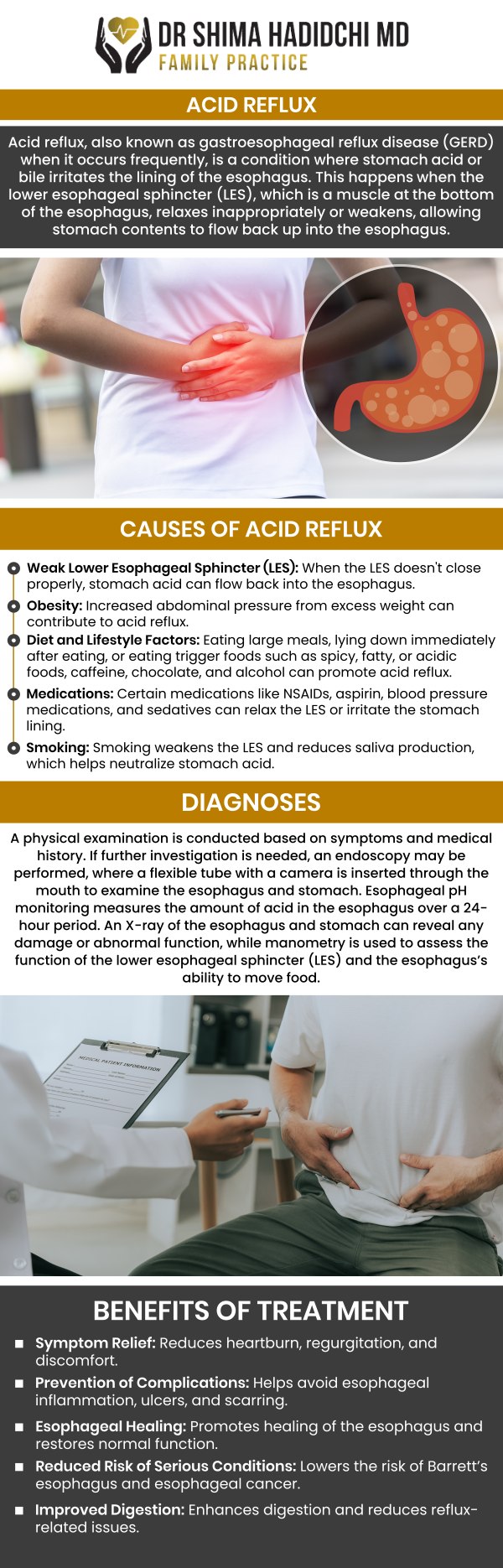
Table of Contents:
What are the most common symptoms of acid reflux?
What foods and habits can trigger acid reflux symptoms?
What is the difference between acid reflux, heartburn, and GERD?
When should you see a doctor for frequent acid reflux?
Get Personalized Help for Acid Reflux With Board-Certified Dr. Shima Hadidchi, MD, and the Team
Acid reflux occurs when stomach contents move backward into the esophagus, the tube that carries food from the mouth to the stomach. This backflow can irritate the esophagus and lead to burning discomfort, a sour taste, regurgitation, or other digestive symptoms. Occasional reflux is common, but persistent acid reflux symptoms may indicate a condition that deserves medical evaluation.
Several factors can contribute to reflux, including eating large meals, lying down soon after eating, excess body weight, pregnancy, smoking, certain foods and beverages, and a hiatal hernia. Symptoms can vary from mild and occasional to frequent enough to interfere with eating, sleep, or everyday comfort. Through our family practice and primary care services, patients can discuss recurring digestive concerns and determine whether additional evaluation may be appropriate.
Recognizing patterns can make reflux easier to understand. Keeping track of meals, symptom timing, nighttime discomfort, and possible triggers may help identify habits that worsen symptoms. Persistent reflux should not simply be ignored, especially when symptoms become more frequent, change unexpectedly, or occur with difficulty swallowing, unexplained weight loss, or other concerning changes.
Heartburn is one of the most recognizable acid reflux symptoms. It typically feels like a burning sensation behind the breastbone that may move upward toward the throat. It often develops after eating and may become more noticeable when bending over, lying down, or going to bed soon after a meal. However, not everyone with reflux experiences obvious heartburn.
Regurgitation is another common symptom. This occurs when stomach contents or acidic fluid moves upward into the throat or mouth, sometimes causing a sour or bitter taste. Other possible symptoms include nausea, upper abdominal discomfort, chest discomfort, difficulty swallowing, or the sensation that something is stuck in the throat. Some individuals with nighttime reflux may also experience coughing, throat irritation, or hoarseness.
Because similar symptoms can occur with other digestive or medical conditions, recurring discomfort should be evaluated in context rather than automatically labeled as acid reflux. Our internal medicine services can help assess digestive symptoms alongside medications, medical history, weight changes, and other health concerns.
Chest pain deserves particular attention because discomfort related to reflux can sometimes feel similar to heart-related symptoms. Severe or unexplained chest pain—especially when accompanied by shortness of breath or pain extending to the arm or jaw—requires immediate medical attention rather than assuming the discomfort is heartburn.
Reflux triggers can differ considerably from one person to another. Foods commonly associated with worsening symptoms include high-fat meals, spicy foods, chocolate, tomatoes, citrus fruits, mint, coffee, and other caffeinated beverages. A food that causes symptoms for one person may not affect another, so unnecessarily eliminating large groups of foods is not always helpful.
Meal size and timing can also influence reflux. Eating a very large meal may increase pressure within the stomach, making it easier for stomach contents to move upward. Lying down soon after eating can also worsen symptoms because gravity is no longer helping keep stomach contents in place. Patients who experience nighttime reflux may benefit from avoiding meals for approximately three hours before lying down or going to bed.
Other habits and health factors may contribute as well. Smoking can increase the likelihood of reflux, while excess body weight can place additional pressure around the abdomen. Tight clothing around the waist may aggravate discomfort for some individuals. Sleeping position, physical activity immediately after eating, and individual dietary habits may also influence symptoms.
Rather than following a highly restrictive diet immediately, patients may find it helpful to record meals and symptoms for a period of time. This can reveal whether specific foods, meal sizes, eating times, or activities repeatedly correspond with discomfort. Regular annual physical exams also provide an opportunity to discuss digestive symptoms alongside weight, blood pressure, medications, nutrition, and broader preventive health needs.
Although the terms are frequently used interchangeably, acid reflux, heartburn, and gastroesophageal reflux disease (GERD) describe related but different concepts. Acid reflux refers to stomach contents moving backward into the esophagus. This can occur occasionally, even in otherwise healthy individuals.
Heartburn is a symptom that acid reflux can cause. Despite its name, heartburn does not originate in the heart. It usually produces a burning sensation behind the breastbone because refluxed stomach contents irritate the esophagus. Someone can experience occasional reflux and heartburn without necessarily having GERD.
GERD is a more persistent form of reflux in which repeated symptoms become troublesome or reflux contributes to complications over time. Frequent exposure of the esophagus to stomach contents can potentially lead to inflammation and, in some individuals, other complications. The frequency, severity, duration, and effect of symptoms on daily life all help determine whether occasional reflux may have progressed into a condition requiring ongoing medical management.
An evaluation usually begins with a detailed review of symptoms and medical history. Additional testing is not necessary for every person, but it may be considered when symptoms are persistent, atypical, severe, or do not improve with initial management. When other conditions need to be considered, our in-house lab testing may support a broader evaluation based on individual symptoms and health history.
Medical evaluation should be considered when acid reflux occurs frequently, becomes progressively worse, interferes with sleep or eating, or continues despite reasonable lifestyle changes. People who repeatedly rely on over-the-counter heartburn products should also discuss their symptoms with a doctor rather than continuing long-term self-treatment without determining why reflux is occurring.
Certain symptoms deserve more prompt evaluation. These include difficulty swallowing, painful swallowing, persistent vomiting, loss of appetite, unexplained weight loss, or evidence of digestive bleeding such as vomiting blood or passing black, tarry stools. These symptoms can indicate a complication or another gastrointestinal problem that requires medical assessment.
Chest discomfort should never automatically be assumed to be reflux. Immediate medical attention is appropriate for severe chest pain or pressure, particularly when it occurs with difficulty breathing, sweating, dizziness, or discomfort spreading to the arm, shoulder, neck, or jaw. These symptoms can occur with a heart attack and require urgent evaluation.
For non-emergency symptoms, our telemedicine services may offer a convenient way to begin discussing recurring reflux, dietary patterns, current medications, and other concerns when an in-person examination is not immediately required. Based on the symptoms, further evaluation or specialty care may be recommended.
Board-Certified Dr. Shima Hadidchi, MD, and our team take an individualized approach to recurring acid reflux symptoms. Evaluation can include discussing when symptoms began, how often they occur, whether they are associated with certain foods, whether discomfort worsens at night, and whether swallowing difficulties, weight changes, nausea, coughing, or other symptoms are present.
Our team can also review lifestyle factors and current medications that may influence digestive symptoms. Depending on individual findings, recommendations may include adjusting meal size or timing, identifying personal dietary triggers, maintaining an appropriate body weight, avoiding tobacco exposure, or modifying other behaviors that aggravate reflux. Additional testing or referral may be recommended when symptoms suggest GERD complications or another digestive condition.
The goal is to understand what is driving recurring symptoms rather than simply masking discomfort whenever it appears. Occasional acid reflux may respond well to practical lifestyle adjustments, while persistent or worsening symptoms may need more structured medical management. Board-Certified Dr. Shima Hadidchi, MD, and our team can help patients identify possible triggers, understand their symptoms, and determine appropriate next steps based on their individual health needs.
When acid reflux begins interfering with sleep, eating, comfort, or everyday activities, a personalized evaluation can provide useful answers. Addressing symptoms early may help improve day-to-day comfort while also identifying whether recurrent reflux represents GERD or another health concern that requires continued monitoring. For more information, contact us or request an appointment online. We are conveniently located at 12740 Hesperia Rd, Suite A, Victorville, CA 92395. We serve patients from Victorville CA, Apple Valley CA, Spring Valley Lake CA, Hesperia CA, Baldy Mesa CA, Adelanto CA, and surrounding areas.

Check Out Our 5 Star Reviews


Additional Services You May Need
▸ Telemedicine
▸ Family Practice And Primary Care
▸ Walk-Ins
▸ Weight Loss Management
▸ Zepbound for Weight Loss
▸ Women’s Health
▸ Vaccinations & Immunizations
▸ Diabetes Management
▸ Geriatrics
▸ Pediatrics
▸ Internal Medicine
▸ Acne Treatment
▸ Cryotherapy Treatment
▸ Skin Lesion Removal
▸ Dementia Treatment
▸ Semaglutide GLP-1 Injections
▸ Flu Shot
Additional Services You May Need
- Telemedicine
- Family Practice And Primary Care
- Walk-Ins
- Weight Loss Management
- Zepbound for Weight Loss
- Women’s Health
- Vaccinations & Immunizations
- Diabetes Management
- Geriatrics
- Pediatrics
- Internal Medicine
- Acne Treatment
- Cryotherapy Treatment
- Skin Lesion Removal
- Dementia Treatment
- Semaglutide GLP-1 Injections
- Flu Shot





 Send Text
 How May I Help You?