

What Is the Difference Between HDL Cholesterol and LDL Cholesterol?
LDL cholesterol is commonly called “bad” cholesterol because elevated levels may contribute to plaque accumulation inside the arteries, increasing cardiovascular risk. HDL is often called “good” cholesterol because it helps transport cholesterol from the bloodstream back to the liver for removal. Board-Certified Dr. Shima Hadidchi, MD, and our team in Victorville, CA, assess HDL, LDL, triglycerides, and total cholesterol together to provide a more complete understanding of each patient’s cardiovascular health. For more information, contact us or request an appointment online. We are conveniently located at 12740 Hesperia Rd, Suite A, Victorville, CA 92395.
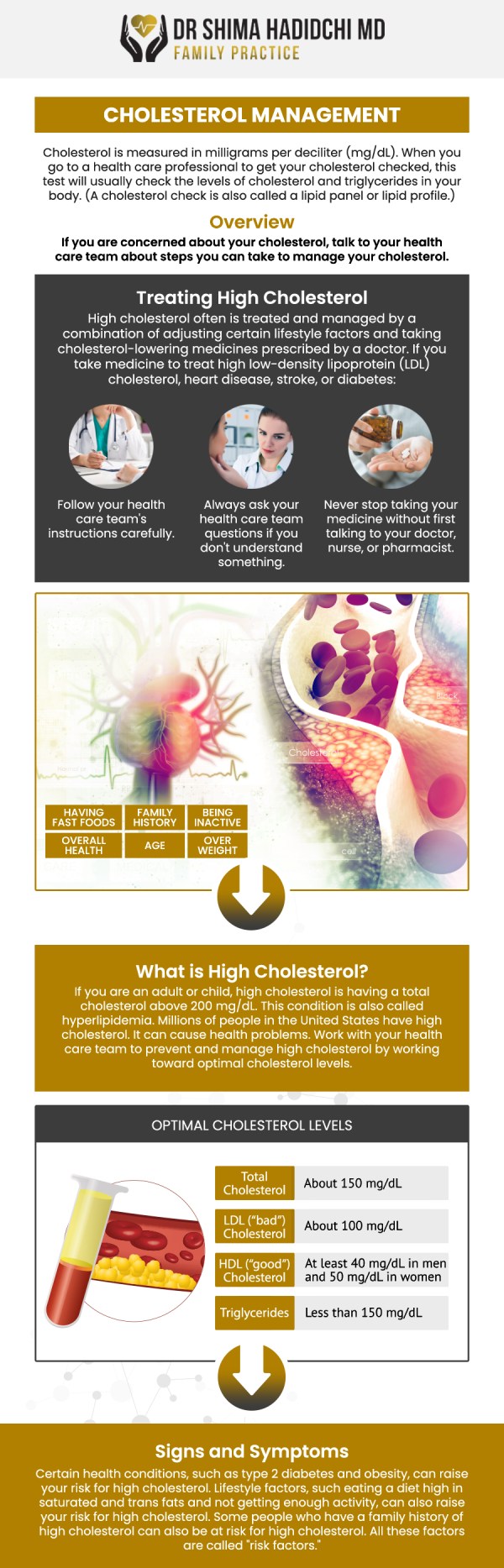
Table of Contents:
What are HDL cholesterol and LDL cholesterol?
Why is LDL cholesterol called bad cholesterol?
Why is HDL cholesterol called good cholesterol?
How can high LDL cholesterol affect the body?
Can you have high cholesterol without symptoms?
Understanding HDL and LDL Cholesterol With Board-Certified Dr. Shima Hadidchi, MD, and the Team in Victorville, CA
HDL and LDL are two types of lipoproteins that carry cholesterol through the bloodstream. HDL, or high-density lipoprotein, is commonly called “good” cholesterol because it helps transport excess cholesterol away from the arteries and back to the liver, where it can be processed and removed from the body.
LDL, or low-density lipoprotein, is often called “bad” cholesterol because high levels can contribute to fatty plaque buildup inside the arteries. Over time, this buildup may narrow or stiffen the arteries and increase the risk of atherosclerosis, heart attack, stroke, and other cardiovascular complications.
At Dr. Shima Hadidchi MD Family Practice, cholesterol levels are evaluated as part of a comprehensive approach to cardiovascular health. Dr. Shima Hadidchi and our professional team may review HDL, LDL, triglycerides, family history, lifestyle habits, and other risk factors to create personalized recommendations for nutrition, physical activity, ongoing monitoring, and appropriate medical care.
LDL cholesterol is called “bad” cholesterol because elevated levels can negatively affect the arteries and cardiovascular system.
• Promotes plaque buildup: Excess LDL cholesterol can collect within artery walls and contribute to fatty deposits called plaque.
• Narrows the arteries: As plaque grows, it reduces the space available for blood to flow normally.
• Causes arterial hardening: LDL-related plaque can make arteries less flexible, a condition known as atherosclerosis.
• Raises heart attack risk: Plaque may rupture and contribute to a blood clot that blocks blood flow to the heart.
• Increases stroke risk: Narrowed arteries or blood clots can restrict blood flow to the brain.
• Often causes no symptoms: High LDL cholesterol may remain unnoticed until cardiovascular problems become more advanced.
• Requires blood testing: A lipid panel is needed to determine whether LDL cholesterol is within an appropriate range.
LDL cholesterol is still needed for normal body functions, but excessive levels can increase the risk of heart disease and other complications. An appropriate LDL level may vary depending on a person’s age, medical history, family history, and overall cardiovascular risk.
Dr. Shima Hadidchi and our team evaluate LDL cholesterol alongside HDL cholesterol, triglycerides, lifestyle habits, and other cardiovascular risk factors. Personalized recommendations may include nutrition guidance, physical activity, routine monitoring, and appropriate medical management to help patients protect their heart health and reduce long-term risks.
HDL cholesterol is called “good” cholesterol because it helps protect the arteries and supports cardiovascular health.
• Removes excess cholesterol: HDL absorbs cholesterol from the bloodstream and transports it back to the liver.
• Supports cholesterol elimination: The liver processes the collected cholesterol so it can be removed from the body.
• Helps protect the arteries: By carrying excess cholesterol away, HDL may reduce the amount available to accumulate within artery walls.
• Supports healthy blood flow: Healthier arteries allow blood to circulate more effectively throughout the body.
• May lower cardiovascular risk: Healthy HDL levels are generally associated with a reduced risk of heart attack and stroke.
• Works as part of the full lipid profile: HDL should be evaluated alongside LDL cholesterol, triglycerides, total cholesterol, and other cardiovascular risk factors.
• Requires blood testing: A lipid panel is necessary to measure HDL levels and assess overall cholesterol health.
Dr. Shima Hadidchi and our team evaluate HDL cholesterol as part of a complete cardiovascular assessment. Personalized recommendations may include nutrition guidance, physical activity, routine lipid testing, and appropriate medical care to help patients maintain healthier cholesterol levels and protect their long-term heart health.
High LDL cholesterol can gradually affect the body by contributing to the buildup of fatty deposits inside the arteries. Over time, these deposits may form plaque, causing the arteries to become narrower, harder, and less flexible. This process, known as atherosclerosis, can reduce healthy blood flow throughout the body.
When circulation becomes restricted, the heart, brain, kidneys, legs, and other organs may receive less oxygen-rich blood. High LDL cholesterol can increase the risk of coronary artery disease, chest discomfort, peripheral artery disease, heart attack, and stroke. Plaque may also rupture and trigger a blood clot that suddenly blocks blood flow.
At Dr. Shima Hadidchi MD Family Practice in Victorville, CA, patients can receive routine cholesterol screening and personalized guidance based on their cardiovascular risk profile. Dr. Shima Hadidchi and the team emphasize early detection, regular monitoring, and practical lifestyle strategies to help manage LDL cholesterol and reduce the risk of future heart and circulation problems.
A person can have high cholesterol without experiencing any noticeable symptoms. High cholesterol often develops silently, and many people do not realize their levels are elevated until they undergo routine blood testing. A lipid panel is the only reliable way to measure total cholesterol, LDL cholesterol, HDL cholesterol, and triglycerides.
Although high cholesterol itself usually does not cause symptoms, untreated levels can gradually contribute to plaque buildup inside the arteries. Over time, this may restrict blood flow and increase the risk of coronary artery disease, heart attack, stroke, and circulation problems. Symptoms such as chest discomfort or shortness of breath may indicate a related cardiovascular complication rather than high cholesterol itself.
At Dr. Shima Hadidchi MD Family Practice, patients can receive cholesterol screening and a personalized evaluation of their cardiovascular risk factors. Dr. Shima Hadidchi and our team review lipid results, medical history, family history, blood pressure, blood sugar, and lifestyle habits to guide appropriate monitoring and help patients protect their long-term heart health.
Board-Certified Dr. Shima Hadidchi, MD, helps patients understand how HDL and LDL cholesterol affect cardiovascular health. HDL, commonly called “good” cholesterol, carries excess cholesterol away from the bloodstream and back to the liver for processing. LDL, often called “bad” cholesterol, can accumulate inside artery walls when levels become elevated, increasing the risk of plaque buildup, restricted blood flow, heart disease, and stroke.
Dr. Hadidchi and our skilled team in Victorville, CA, evaluate HDL, LDL, total cholesterol, triglycerides, medical history, family risk factors, and lifestyle habits as part of a comprehensive cardiovascular assessment. Based on each patient’s results, they provide personalized recommendations for nutrition, physical activity, routine screening, and appropriate medical management to support healthier cholesterol levels and long-term heart health.
For more information, contact us or request an appointment online. We are conveniently located at 12740 Hesperia Rd, Suite A, Victorville, CA 92395. We serve patients from Victorville CA, Apple Valley CA, Spring Valley Lake CA, Hesperia CA, Baldy Mesa CA, Adelanto CA, and surrounding areas.

Check Out Our 5 Star Reviews


Additional Services You May Need
▸ Telemedicine
▸ Family Practice And Primary Care
▸ Walk-Ins
▸ Weight Loss Management
▸ Zepbound for Weight Loss
▸ Women’s Health
▸ Vaccinations & Immunizations
▸ Diabetes Management
▸ Geriatrics
▸ Pediatrics
▸ Internal Medicine
▸ Acne Treatment
▸ Cryotherapy Treatment
▸ Skin Lesion Removal
▸ Dementia Treatment
▸ Semaglutide GLP-1 Injections
▸ Flu Shot
Additional Services You May Need
- Telemedicine
- Family Practice And Primary Care
- Walk-Ins
- Weight Loss Management
- Zepbound for Weight Loss
- Women’s Health
- Vaccinations & Immunizations
- Diabetes Management
- Geriatrics
- Pediatrics
- Internal Medicine
- Acne Treatment
- Cryotherapy Treatment
- Skin Lesion Removal
- Dementia Treatment
- Semaglutide GLP-1 Injections
- Flu Shot





 Send Text
 How May I Help You?